How to Review the School Day at Home: A Guide for Parents

Reviewing the school day at home can be a valuable practice for reinforcing learning, fostering communication, and strengthening the parent-child relationship. Parents play a pivotal role in helping children process what they learn at school, allowing for a deeper understanding of academic content and supporting emotional development. Research suggests that discussing the school day can enhance memory retention, boost motivation, and build stronger academic habits (Epstein, 2011). This blog explores strategies for parents to effectively review the school day at home in a way that promotes both academic success and emotional well-being.

Open-Ended Questions Encourage Meaningful Conversations

One of the most effective ways to review the school day is through open-ended questions, which encourage children to reflect on their experiences. Instead of asking, “How was school?”—which often elicits a simple “good” or “fine”—parents can ask more specific questions that prompt deeper thought. Questions such as “What was the most interesting thing you learned today?” or “Can you tell me about a challenge you faced?” allow children to express themselves in more detail and engage in meaningful conversations.

Research by Fishel and Ramirez (2005) suggests that open-ended questions help children reflect on both academic content and their emotions, fostering emotional intelligence and self-awareness. Parents should listen actively and avoid interrupting, allowing the child to take the lead in sharing their thoughts. This process not only helps children articulate their learning but also fosters a sense of support and encouragement from the parent.

Incorporate a Routine

Creating a routine for reviewing the school day can be beneficial for both parents and children. Just as students thrive on routines in the classroom, having a set time to discuss their day at home can provide structure and consistency (Epstein, 2011). Whether it’s during dinner, on the ride home from school, or before bedtime, establishing a regular time for reflection can help children prepare mentally and emotionally to share their thoughts.

Routines also ensure that reviewing the school day becomes a habit rather than a sporadic activity. According to Clear (2018), habits are more likely to stick when they are tied to specific cues—such as the end of the school day or a family meal. By setting aside a specific time for this conversation, parents can create a predictable space for children to open up about their day and process their learning.

Celebrate Small Wins

Acknowledging and celebrating small achievements during the school day can boost children’s motivation and confidence. When reviewing the day, parents should focus on both academic and social accomplishments, reinforcing that all aspects of the school experience are important. Positive reinforcement, such as recognizing effort in completing a challenging assignment or highlighting acts of kindness, encourages children to take pride in their work and social interactions.

According to Carol Dweck’s (2006) research on the growth mindset, praising effort over inherent ability helps children understand that they can improve through hard work. By celebrating progress rather than perfection, parents can help their children develop resilience and a love of learning. Simple gestures like verbal praise or spending quality time together as a reward can reinforce the positive behaviors associated with schoolwork.

Focus on Emotions, Not Just Academics

School days are not just about learning math or reading; they are also filled with emotional and social experiences. It’s essential for parents to recognize the emotional dimension of their child’s school day when reviewing it at home. Asking about how a child felt during different parts of the day, how they navigated social interactions, or whether anything made them feel frustrated or proud can open up a broader conversation about emotional well-being.

Studies by Elias et al. (1997) highlight the importance of emotional intelligence in academic success. When parents provide a safe space for children to express their emotions, they help build emotional regulation skills, which are crucial for managing stress and maintaining focus in school. Additionally, validating a child’s feelings—whether they are excited, frustrated, or anxious—can create a supportive home environment where children feel understood and valued.

Encourage Problem-Solving and Reflection

Part of reviewing the school day should involve helping children reflect on any challenges they encountered. Whether it’s a difficult math problem, a disagreement with a friend, or anxiety about an upcoming test, parents can encourage their children to think critically about how to address these challenges. Asking questions like “What do you think you could do differently next time?” or “Is there anything you need help with?” can guide children toward problem-solving strategies.

According to Xu and Corno (2020), reflection and problem-solving are critical skills that contribute to academic resilience. By encouraging children to think about solutions rather than just focusing on problems, parents can foster a sense of independence and self-efficacy in their children. This approach also reinforces the idea that challenges are a normal part of learning, helping children develop a healthy attitude toward overcoming obstacles.

Conclusion

Reviewing the school day at home offers numerous benefits, from reinforcing academic concepts to fostering emotional intelligence. By asking open-ended questions, establishing a routine, celebrating small achievements, and focusing on both academic and emotional experiences, parents can create a supportive environment that encourages their children’s growth. This daily review not only strengthens the parent-child bond but also instills lifelong learning habits that contribute to academic success and emotional well-being.

References

Clear, J. (2018). Atomic habits: An easy & proven way to build good habits & break bad ones. Avery.

Dweck, C. S. (2006). Mindset: The new psychology of success. Random House.

Elias, M. J., Gara, M. A., & Ubriaco, M. (1997). Emotional intelligence, social problem solving, and applied intelligence. In Social development: Relationships in infancy, childhood, and adolescence (pp. 167-193). Sage Publications.

Epstein, J. L. (2011). School, family, and community partnerships: Preparing educators and improving schools. Westview Press.

Fishel, M., & Ramirez, L. (2005). Parent involvement in children’s education: A review of research and policy. Family Involvement Research Digest, 1-6.

Xu, J., & Corno, L. (2020). Engaging homework: Perspectives from teachers, parents, and students. Theory Into Practice, 59(1), 45-55. https://doi.org/10.1080/00405841.2019.1682173

How Fast Life Changes: House Fire & Post-Op

I meant to update with my post-op hysterectomy, but life happened.

I had surgery on June 23rd. My post-op appointment was July 31st. Work started August 1st. But…My mom had a house fire on July 23rd.

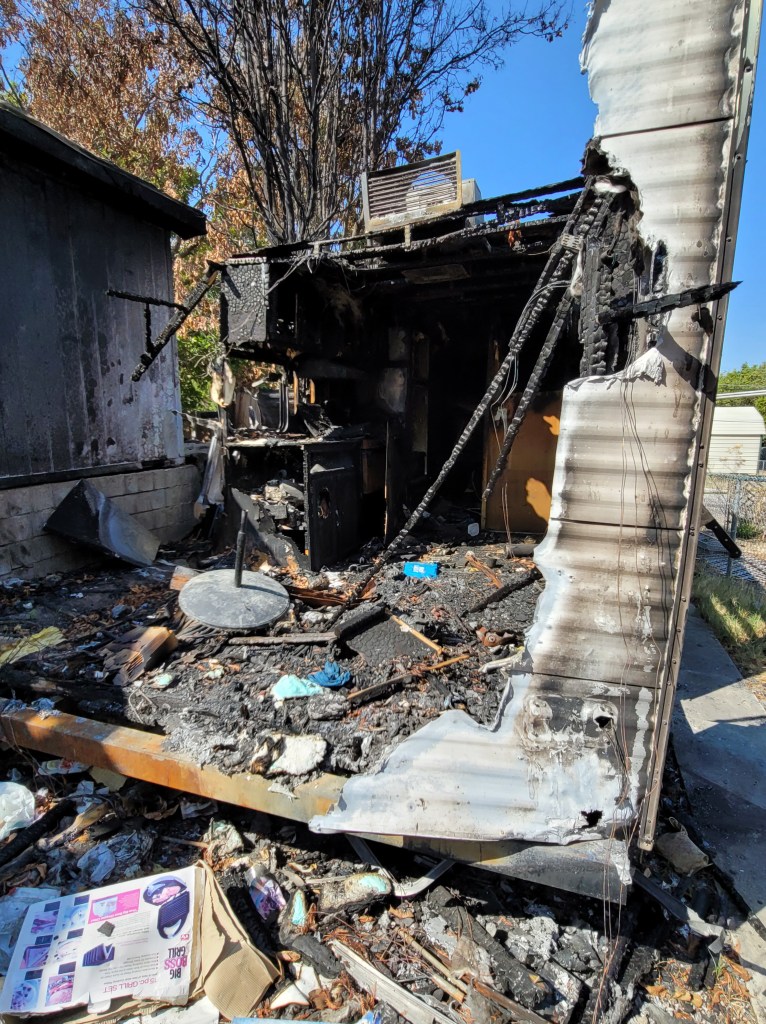
The house fire was my childhood home. I grew up in that house and lived there for 26 years. Memories filled that home with good and bad. A lot of the “major” events of my life happened there: graduation from high school, graduation with my Bachelor’s degree, graduation with my Masters, first job, current job, and much more. My mom lived in that house for 40+ years and owned it. She didn’t have insurance due to State Farm dropping her for previous claims.

If you’d like to donate to the GoFundMe, we would greatly appreciate it. I also have Venmo (@AngelBoucher) and Cashapp ($AngelBoucher).

My brother and she lost everything: clothes, hygiene, their home, furniture, bedding, towels, etc. My brother’s car key and phone melted in the fire. We had to call a locksmith to make him a new key. She also now needs to find a new home of some kind. My mom is 70 years old, which is nearly impossible to start over. HUD housing has a 2+ year waitlist. Habitat for Humanity is not taking applications. We’ve reached out to a million people, and there just isn’t much help right now, understandably so.

My mom and brother made it out, barely, along with their dogs. Some cats made it out, while others did not. Immediately following the fire, my brother moved in with my oldest brother and sister-in-law. My mom moved in with me.

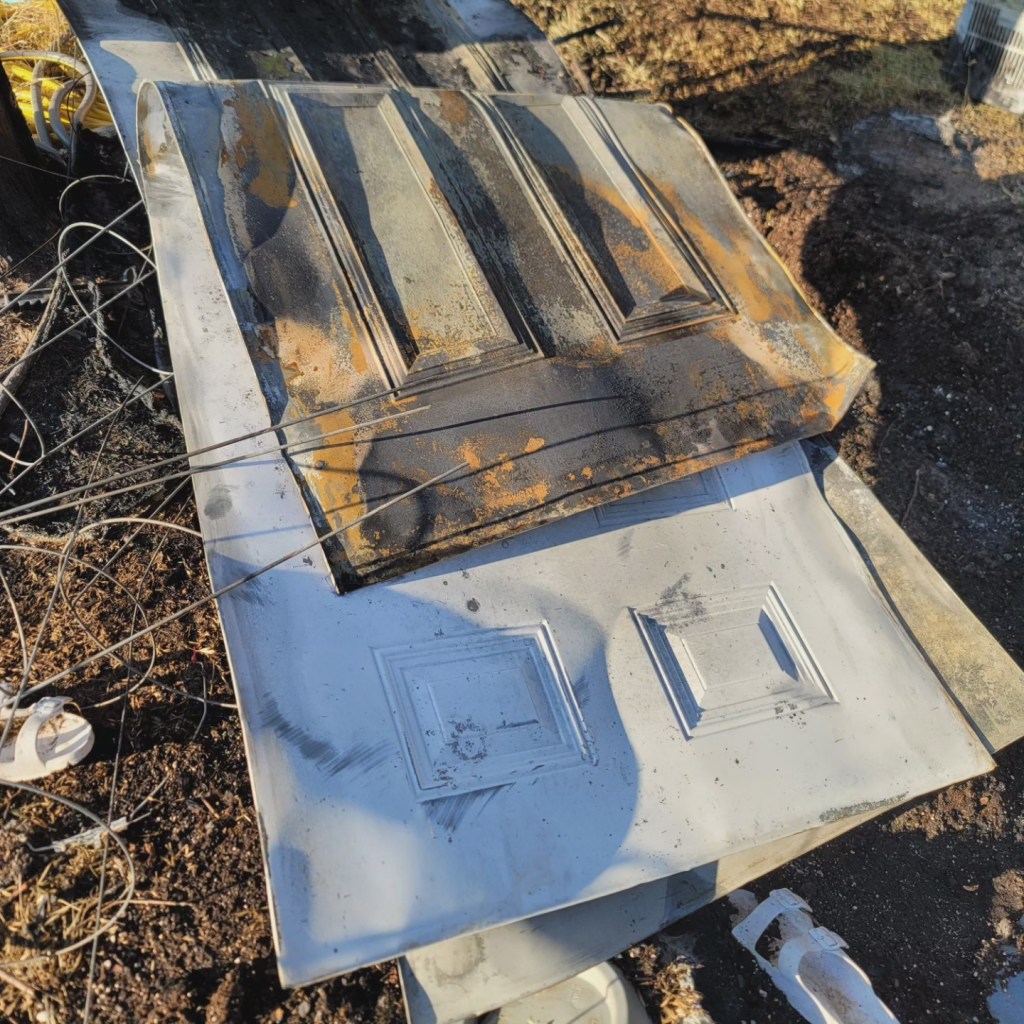
The fire started with a window air conditioning unit. Because Texas has had an extremely dry summer, the grass around it was dry and dead. The fire spread quickly, causing the majority of the house to burn and all of my brother’s RV. What wasn’t burned was filled with soot from the fire. The house was declared a danger, uninhabitable, and a total loss. Two cities had to come help put out the fire. It took several hours to put out. It reignited and required them to come out a second time.

It’s been extremely stressful and depressing since the fire. Add on work stress and normal life stressors. It’s been a rough month and a half. I haven’t had the time or mental capacity to update. Processing so much loss in a short amount of time is difficult.

Wednesday, September 6th, 2023 what’s left of the house gets demolished. At first, I was okay with the thought. As it nears, I am much more emotional about it. I couldn’t figure out why. The memories exist regardless of the physical house or not. But then it hit me…

The house has two meanings to me:
1) It was the last big physical memory of my dad.
2) The house was symbolic of my life: from the happy, new beginnings to the demise into pieces. I won’t go into details right now, but…it really made my emotions make sense.

I knew I had to make this post. Not only to update those curious about the hysterectomy but also just a general update. I’ve been struggling, mentally.

Mental health is not talked about enough. As someone who used to write for a mental health company, I am pretty self-aware. Not everyone is, and not everyone has support. I think it’s important for more people to talk about the reality of how strenuous things (small and big) can be on the mind. At times, it can feel incredibly overwhelming. At other times, I feel completely numb and lack any empathy.

As for my post-op, everything was fine. I had a few stitches not yet resolved. He cleared me to return to normal activities. I have yet to make it to the gym. He said that a year after surgery, my body was only 80% healed. I found that fascinating. The doctor mentioned that my scar tissue would break down and build up over and over throughout the healing process. I may feel times of discomfort, but generally, I should be okay. He emphasized listening to my body. He did say I wouldn’t need any future exams, as I chose a full hysterectomy.

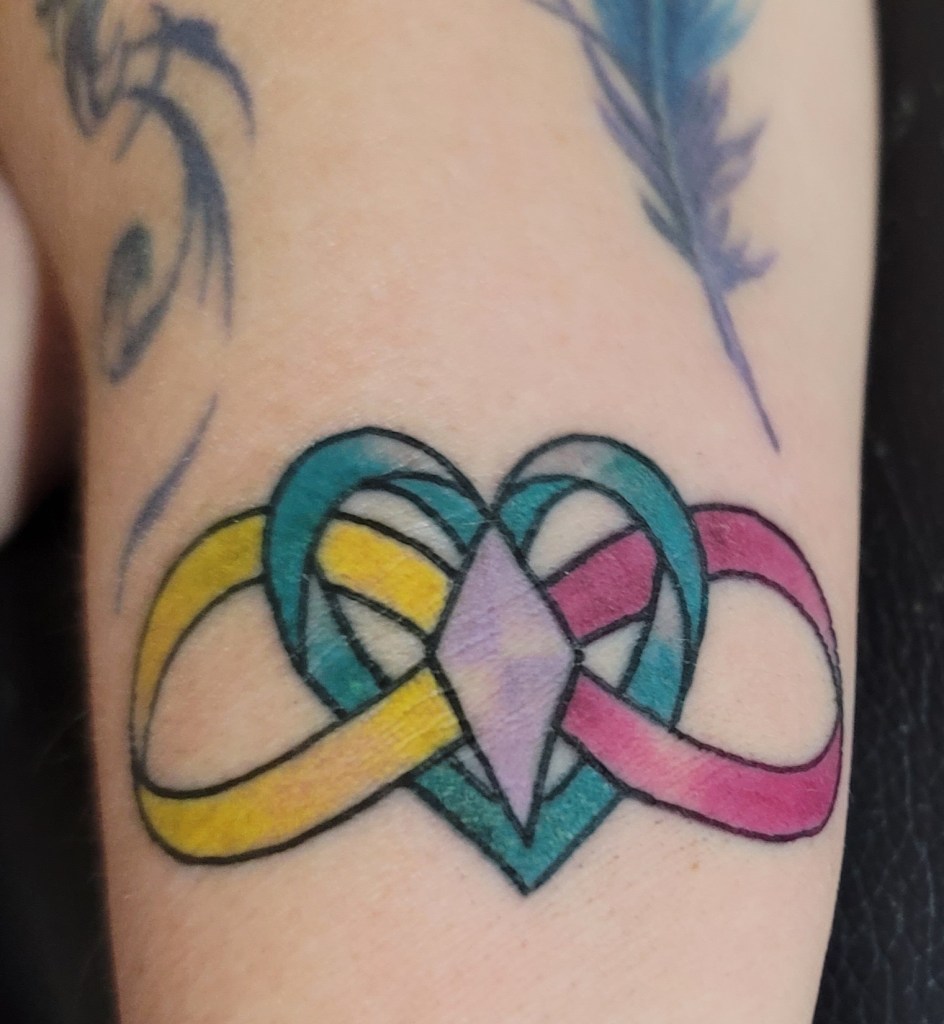
In the midst of everything going on, I chose to get a tattoo to symbolize my hysterectomy.
Yellow = Endometriosis
Teal = Polycystic Ovarian Syndrome (PCOS)
Magenta = Adenomyosis
Purple = All three mixed together

A lot has changed in my life in the last month. A lot will continue to change. Every day I get stronger – mentally and physically. Life will never cease to amaze me.

I plan to use the next couple of months regathering myself and figuring things out.

Tips & Purchases for Hysterectomy

If you’re like me, you’ll probably research a lot about your surgery before it happens. It’s always better to go into something prepared. As I told my mom, I’d rather have things I don’t need and return them than not have them and need them. We all heal differently, but most every woman can agree that these items will help with the recovery of a hysterectomy.

Any product link is NOT affiliated.

General Tips

1. Hydrate: I was lucky to be told I could hydrate up to two hours before surgery. In fact, I was given a special pre-surgery drink from Ensure that is supposed to help with recovery. I looked into this because I thought it was just a marketing scheme, but there are actual medical studies on how this drink helps patients recover. One thing I was told and looked up to be true was that the more hydrated I am, the better the recovery will be. In my mind, I rolled my eyes. However, it was true. Leading up to my surgery, I made sure to down at least 60 ounces of water every day. After surgery, I drank at least 120 ounces in the hospital in 48 hours. I peed like I’ve never peed before, but that’s a good thing (we’ll talk about catheters later). During recovery, my days were a hit-and-miss. On days I didn’t drink enough, the next day was rough. On days I had plenty of fluid, I felt unstoppable the next day. Stay hydrated!

2. Walk A Lot: You’ll want to lay around in the hospital bed and/or at home a lot. It’s natural. Everything hurts. However, the more you walk, the better you’ll feel. Walking not only helps with the inflammation and rebuilding of the muscles, but it will also help move the surgery gas through your body. The surgery gas is one of the worst parts of this procedure (see below). The faster you get it out of your system, the better you’ll feel. When you walk more, it moves the gas around to help it escape. Walking also helps the bowels function to prevent constipation (details coming later). Lastly, walking helps reduce the possibility of blood clots.

3. TAP Block: I was lucky to have them give me a TAP Block during surgery. Even with that, though, I woke up from anesthesia in severe pain (see below). After waking up, they offered me a second TAP Block. TAP Blocks are similar to epidurals but are given in the front of the body to block the lower limb nerves. It was an uncomfortable shot, but it was well worth it considering the pain you’ll have when you first wake up. It will help with recovery and lessen the pain, in turn lessening the need for pain meds.

4. Rest: You’ll want to return to normal activities. Don’t let your body fool you. You’ll have some great recovery days, but if you overdo it, it can cause more damage to the site. You’ll want to test as much as you can to ensure you heal properly so you won’t have secondary effects. No matter how ready you feel, do not lift things!

5. Have Someone to Help: If you live alone, make sure to have a plan for someone to help you. The first few days, you’ll halt being able to do anything. Don’t try to force it. Having someone to help do laundry, dishes, getting food, etc. is helpful. You’ll not want to risk injuring yourself during recovery.

6. Prepare for Waking Up: Waking up from anesthesia will be the worst you’ve ever felt in your life. I felt myself trashing around in the hospital bed, crying in pain. No one talks about those first 10 minutes, but it is the worst. It’s like you’re waking up in the middle of the surgery itself. Luckily, if you have good nurses, they’ll notice it and handle your pain meds immediately. After you get over the first two hours of anesthesia wearing off, you are golden! Nothing will compare to the feeling of just waking up, though.

7. Have Things to Do: You’ll get bored incredibly quickly after the surgery. There is only so much you can do on your phone, including games. It may become hard to focus on audiobooks and reading because of the medication. You won’t be able to lift anything, so you’ll have to be careful what activities you choose to do. You won’t be able to have anything on your stomach either. I personally used this time to learn how to crochet and expand my interest in writing. Hide the credit card because it will be so easy to just shop from your phone all the time!

8. Have Easy Meals: Whether you stock up on frozen dinners or whether you have pre-made meals, it’s important to have meals that are easy to reheat/heat. Coming out of surgery, you’re not going warm to stand over a stove or oven trying to cook something. You’re also not going to want to do a ton of dishes afterward, either. I personally bought quite a few ready soups. Because I knew that a liquid diet would be beneficial for the movement of my bowels. However, I did get some other frozen dinners to make up for days when I felt like I needed solid food or protein.

9. Prepare Mentally: Aside from the physical pain, the emotional/mental side of this surgery is tough, especially if you’re fairly independent. You will need support, good friends/family to check in on you and help you, and you’ll need distractors for things you can no longer do or pain.

Must Have Items to Buy

1. Gas-X, Miralax, and Stool Softeners: The gas is extraordinarily painful. The gas you’ll have will build up in your intestines and your body by your shoulders, rib cage, back, etc. The faster you can relieve this gas, the better you’ll feel. On the same token, the pain medication will/can cause constipation. You don’t want to be constipated because it can cause damage to the surgical site. The easier bowel movements you have, the faster you will heal. You’ll want to take Stool Softeners and Miralax to help get things moving. If you haven’t gone in a week, you need to contact your doctor. It is also recommended to potentially do an enema as well if no bowel movement has occurred. Once you have diarrhea, though, back off the Miralax. Diarrhea is equally as bad as constipation when it comes to the healing process. Generic brands are fine.

2. Heating Pads & Ice Packs: Heating pads help not only with pain and swelling but also help in moving the gas around. The gas tends to be the worst part of the surgery, so the faster you get it to move and release from your body, the better you’ll feel. Ice also helps with inflammation and swelling post-surgery. My personal favorite heating device is the electric portable one. I can take it with me to work, drive, etc. It lays flat on my site so it ensures constant contact. A regular heating pad works well at home. Similar to the heating pad, I enjoy the clay ice packs with the Velcro enclosure. It allows me to have the ice pack flat, with pressure, on the site. At home, the large or extra-large ice pack would be great.

3. Belly Binder: Most of the time, the hospital will provide one for you through your insurance. However, if they don’t, or if you want to be prepared, I would suggest getting a belly binder. It doesn’t have to be fancy or detailed, but a bigger one for the whole abdominal area will help. After surgery, your other organs are fighting for the open space. Add that to the rawness and swelling of the surgery, and it’ll feel like cinderblocks are attacked to you. Pulling yourself up, getting up from a seated position, laying down, and even using the bathroom are all painful after surgery, so this will help create a tight feeling to make it more tolerable. It feels like someone hugging your abdominal muscles all day. It truly feels amazing! I was lucky to get one through my insurance, but Amazon has a belly binder similar. You can get them in all sizes.

4. Loose Clothing (Nightgowns/Dresses), Including Underwear: With the swelling and inflammation, you’ll want to have your clothes barely touching you. It’s really recommended to wear nightgowns and/or dresses to have no pressure on your incision sites. It will allow your incisions to breathe as well. You’ll relieve so much pain just by going up a size for this surgery. I bought my nightgowns through Walmart. Their nightgowns were soft and cool. I got it one size bigger than I needed for comfort and swelling purposes.

5. Apple Juice & Cranberry Juice: Apple juice will help with bowel movements and cranberry juice with help prevent urinary tract infections. During surgery, you’ll be given a catheter. Depending on how surgery goes, it may come out immediately. It may be left in. It’s no surprise that peeing after a catheter feels like a gas-fed fire. It’s incredibly painful. The more hydrated you are, the faster that pain will go away. Cranberry juice helps fight a potential infection. These pills can be taken to help as well, but not necessary if you maintain hydration and urinary movements.

6. Ibuprofen & Tylenol: Your doctor will only prescribe a few pain pills. The goal is to keep you off of them to ensure you don’t get constipated and to avoid possible addiction. They will tell you to begin taking the biggest dose of Tylenol and Ibuprofen possible in between pain meds to help the body adjust. Once you’re out of pain meds, it’s unlikely your doctor will prescribe more.

Recommended, but Not Necessary

1. Shower Stool/Shower Handles: Lifting your leg and standing for long periods will be difficult. It will exhaust all energy you have in your body. Standing up straight will feel impossible for the first few days. By using a shower stool, you’ll be able to take a good shower without feeling too much pain from the swelling or the tightness from trying to stand. If you know someone who had one, I would go that route. The hospital may also be able to get one approved through your insurance.

2. AVO Urinary Tract Infection (Cranberry) Pills: As mentioned previously, there is an increased risk of infection due to having the catheter. You’ll struggle to urinate the first few days as well, which can increase the risk of infection. To prevent that, you’ll want to stay hydrated. These pills can lessen the possibility of getting a urinary tract infection in the meantime.

3. Pillows: If you can afford nice wedge pillows, I would suggest that. However, cheap Walmart pillows will do as well. You’ll want one to protect your stomach, especially if you have pets or young kids. You may also buy a small one for driving to protect from the seat belt. You may want a pillow for your legs to prop them up. The first few days will be hard to straighten your legs. You may use it in between your legs as well if you’re a side sleeper. I bought four new pillows to help prop different parts of my body. I probably didn’t need that much, but it was good to have them!

4. Seat Belt Protector: This is a must-have, but there are other options out there. The seat belt protector protects your surgical site from the pressure of the seat belt. It allows you to place an ice pack or heating pack in there as well for additional comfort. Although you won’t necessarily be driving, even as a passenger, you’ll want the relief. The one I bought from Amazon has an ice/heat compartment. It’s soft and washable!

5. Abdominal Massager/Heat Pad: Although a basic heating pad would work, these machines do a great job of putting the perfect pressure on the abdomen. They provide a soothing light massage that won’t be too hard on your surgical site. It’s more of a vibration than anything else. What I like most about it, though, is that it sits perfectly around your abdomen, versus, a heating path that doesn’t have enough pressure to stay down on your stomach. Some brands are much louder and have more vibration than others, so make sure that you read the reviews. I linked my favorite to the heating/ice post.

Post-Surgery Recommendations

1. Cooling Blanket: Once your hormones start acting up, you’re going to start having hot flashes. To help prevent this, a cooling blanket is helpful. It’s a thin blanket that takes your heat and turns it into cool. They usually have running deals all the time on these. I highly recommend that you get one while on sale. My cooling blanket is fairly thin, but it does a great job converting heat to cool.

2. Tower Fan: Along with the hot flashes. I would also recommend getting a tower fan. You may not have hot flashes all the time. That tower fan will be extremely beneficial in cooling you off. The technology of these fans has grown tremendously, and you could now get one with Wi-Fi. You’ll want one with good running time, height, and strong power.

3. Neck Ice Rope/Fan: I would recommend getting both the ice rope and a neck fan. Both of these will help cool you in the middle of a hot flash. I personally like the ice rope better because it is colder, but the neck fan is also incredibly helpful with circulating air around your face. I got mine off Temu because I had enough notice. However, Amazon has neck ropes and neck fans as well!

4. Grabber Claw: If you live alone, I feel like this is essential to have, especially within the first week of surgery. You may end up dropping some things during your time either because just being fatigued or just because it happens. Bending over is incredibly hard, and even bending at the knees hurts. A grabber will help you pick up anything that you may drop. I personally did not use one, but I can see why it would be beneficial.

5. Squatty Potty: I would recommend this even without surgery. I feel like having this will make your bowel movements so much easier. Especially with being on pain medication. Another way around this is to buy some yoga blocks to help elevate your legs to create the perfect angle for your bowels.

6. Menstrual Underwear/Panty Liners/Adult Diapers: I don’t feel like this one is as necessary unless you had a tough procedure, In which case, the doctor will likely tell you that it was a tough procedure. You will have some spotting after surgery, which is totally normal. How long it lasts depends on how well the procedure goes and how well you take care of yourself during recovery. I personally only have spotting for about twenty-four hours and then one time after that for very light spotting. I personally only used a panty liner, but I’ve heard a lot of women who said they did, and it was beneficial for them.

7. Throat Lozenges: After intubation through the breathing tube, you’re going to have irritation to your throat. It is important that you handle that either through the method of cough drops, throat lozenges, or tea. The feeling eventually goes away, but it will be a rough couple of days on top of your abdomen being in pain.

Overall

Recovery isn’t terrible for most patients, especially for those who do it through laparoscopic incisions. If they have made a long incision, recovery will take longer and be more difficult.

The first week is the most challenging. After the first week, things begin to settle and you start to feel semi-normal. By the end of week two, you feel more like yourself and want to challenge yourself to do more. Remember, you are still recovering. Despite how strong you may feel, it’s important to relax and recover.


Going Back to Our Roots – Polar Vortex Edition

The United States was recently hit by an Arctic Polar Vortex. Although this isn’t uncommon for northern states, for southern states it came as a shock. Places like Texas hit temperatures, snowfall, and ice records that haven’t been seen in decades or even centuries.

During this historic event, Texas had to conduct rolling blackouts in order to preserve electricity. Some homes went over 12 hours without power. Others lost power for 40 minutes, but then it would turn back on for 15-20 minutes. This left many people with no warmth or ability to cook.

The temperatures were steady between 6° and 20°. Wind chills fell between -17° and 0°. This was the second time in less than a month that Texas received record breaking temperatures and snow. Going outside to build a snowman is fun, but maybe only for a few minutes before hypothermia becomes a concern.

Internet service providers were offline. Cell phone towers were overloaded, so data slowed down (or cut in-and-out). The roads had anywhere between 3 inches and over a foot of snow on the ground, with ice underneath.  Stores closed down or closed early. Food chains shut down for the safety of its employees. County offices shut down for the week. Schools delayed learning face-to-face and virtual (due to power outages). All of this led to families or individuals being stuck inside with nothing to do.

Unable to go outside for long periods of time, unable to drive anywhere due to road conditions, unable to use power, unable to use the Internet, and having barely any data, when we live in such a technology drive world, what can be done to prevent yourself from going stir crazy?

Emergency Kits

Hopefully, living in a place like Texas, notorious for severe weather, you’ve stocked up on a variety of candles or emergency lights. Texans are known to prepare for weather events from hurricanes to tornadoes. Using these emergency kits are beneficial in times when there is no power. But how can they be used?

Reading

By setting up a candle, or emergency light, you can read either a new book or a favorite book. Even as a family, you could return to elementary and secondary school and take turns reading. This can create a bonding moment between members, increase comprehension, and can be fun for an individual or a family.

There are so many genres to read from. We all have our favorites, but maybe this outage provides an opportunity for you to explore new genres. As someone who didn’t enjoy any science fiction related books, including dystopian, I always looked the other way when I was suggested any science fiction or dystopian books. Harry Potter and Hunger Games never interested me (I know, I know…I’m sorry). It wasn’t until a co-worker introduced me to a dystopian science fiction book, Red Queen, that I was able to truly explore the genre. I enjoyed the book so much that I continued the series. It was a rare moment that I truly enjoyed a genre that I always found unappealing.

I suggest the Genre 10 challenge. In Genre 10, you choose 10 genres of reading that you normally wouldn’t read and give them a shot. Some households already have all the genres in their house, but usually dedicated to specific people. What genres can be suggested?

  • Young Adult
  • General Fiction
  • Realistic Fiction
  • Historical Fiction
  • Poetry
  • Romance
  • Dystopian
  • Science Fiction
  • Biography
  • Autobiography
  • Memoir
  • Self-Help
  • Business
  • Finances
  • Psychology

With so many options, even reading one new genre would be worth a try during a national Arctic Polar Vortex.

New Hobbies/Interests

Learning new hobbies or interests is something we don’t often think about, because we live in a country of go, go, go! We don’t give ourselves enough time to explore new tasks anymore. Using your emergency kit, you are able to spend some time learning something new.

Hair, Beauty, and Fashion

You can use this time and resources (candles) to explore new styles. Using candlelight, explore options in makeup, hair, or even fashion.

With a candle lit in the bathroom, you can sit in front of the mirror and begin creating new looks for yourself. By using simple techniques and products (gel, hairspray, mouse, etc.), you can explore new hairstyles. We get so used to seeing ourselves look one way, and we become comfortable with not changing. Why not use the day(s) to explore a new look that has been considered for some time? Maybe instead of slicking the hair back, explore slicking it forward, to the left, to the right, parted down the middle, etc. Work with updos (man bun exploration). Try a half up-half down look. It may be worth a shot to even bring the mullet back (Miley Cyrus is trying to bring her dad’s signature look back in style).

Makeup is another area to be explored. I’m a pretty simple person when it comes to makeup: mascara and occasionally eye liner. If you’re like me, or even do slightly more, maybe this is the time to explore full on facial looks like that of famous makeup artists or influencers (James Charles, Jeffree Star, Jaclyn Hill, Anastasia, Bobbi Brown, Pat McGrath, etc.). Have you always wanted to learn a cut crease or contouring? Try it now! What do you have to lose? You’re in your house with nothing better to do than explore! Want to practice gradient eyeshadows or a smokey eye? Go for it! There could be no better moment than now to explore such interests. Proud of your look? Take some headshots of the new look using your phone or a battery camera (yes, they still exist).

We all have closets with at least one piece of clothing we’ve hung on to, but never worn. Whether the clothing be too big, too small, not in season, or we just haven’t gotten around to it, it’s time to put it to use.

We become comfortable wearing the same outfits and rotating them and the color schemes (nothing like maroon and mustard yellow, purple and yellow, pink and green). Why not branch out on a day when everything seems helpless and create some new looks? Take the time to play with color schemes you normally wouldn’t consider. Mix and match outfits that have different looks to them (grungy with preppy, business with casual, modern with vintage). Not an accessories person? Or have so many shoes you’re not sure how to incorporate into your fashion? Try them all! There is no better than to experiment. You’re sure to find something that stands out and makes you excited about wearing it when the weather gets better! As a bonus, you could provide a fashion show for neighbors, friends, or family!

Workout

Bodyweight exercises can be done anywhere! Every year, as a new year’s resolution, so many Americans state they will “eat better and lose weight.” While experiencing no power, why not challenge yourself to starting this new habit. It doesn’t hurt that it keeps you warm in the process. Not sure where to start? We all need a starting point.

Burpees are great for a full body workout. It can be modified for the advanced or beginner workout. In a beginner range, you may just reach up, bend down to touch the ground, put one foot back at a time, and reverse to come up. As an advanced workout guru, you could squat down, jump up to reach the sky with those buff arms, jump down and kick out at the same time, do a pushup, jump back, and repeat. Any modification in between those two is also great.

Walking, running, side steps, or jumping jacks in place is always a simple option. This will let your heart start pumping and burning calories while there is nothing else to do. You could do it for hours or in intervals. Maybe walking for 20 minutes, rest for 10, and walk another 20 minutes. Again, this can be modified in any way, but it’s a way to stay busy.

Don’t have weights? Use items around the house. Milk or water jugs are great replacements for dumbbells. Laundry detergents, bleach bottles, and fabric softener bottles also work great. Need something small and light? Use water or soda bottles to lift repeatedly. Do you have a case of water or drinks you can use to lift? Do you have cat litter you can carry? What about a toddler to carry around the house? It’s not so much about the weight as it is about working the muscle. Use a wall for wall pushups or wall sits. Use a chair for dips or stability for leg workouts. Use the resources within the house to build those muscles and get the blood flowing.

Other General Hobbies

Do you love to write? Draw? Sing? Paint? Dance? Use this time to create beautiful masterpieces. You can keep them private, show them off, or send them out when the weather clears and/or internet is back on. Make a song, even if it’s just the lyrics. Create a musical chord on your guitar or piano. Create a routine to a song you love. Doodle away or draw a 3D piece. Even without a canvas or paint, we can take makeup, food color, food, or drinks to paint on paper, cardboard, etc. Learn how to hand sew items or crochet in the dark. I have yarn and a crochet needle that have been sitting in my spare room that I’ve neglected. Now is the time to dig it out and try it! Start a book (non-fiction or fiction). Do you have stage fright and need the opportunity to practice? Go to a neighbor, sing in front of family, record yourself to post later. Are you a builder? Do you want to practice building with a variety of media (cardboard, paper, bottles, cards, etc.)? Try it! Practice your poker technique or chess technique for your next big match. Practice gravitational pulls of spinning a basketball on your finger or balancing something on your head while walking. Sports coach for a local community or want to start getting involved in the community? Use this time to jot down plays, come up with government bill ideas, municipal involvement/changes, volunteer opportunities, financial investments, etc.

Redecorate, Organize, or Clean

Even by candlelight, we can use this time to redecorate. Want to try a new look for your living room? Do it now while you have the time to do it. You don’t like how the bathroom counter looks? Move stuff around, organize into boxes below the sink, or find new ways to not overcrowd the vanity. Want to rearrange the bedroom to be more effective in movement? Try it now, even by candlelight. If you don’t like it, you can always move it back. Do you not like the dining table near the wall? Try to move it to the center of the kitchen and see if it flows better. If it doesn’t, move it back. Wipe the counters down, dust what you can see, wipe the doors down. You may not be able to vacuum or mop, but this is an opportunity to do what you can. Now is the perfect time to try these new ideas. Pinterest is overloaded with ideas for people to try!

Try It Now

Being creative seems to be a lost art, especially as we get older. We spend so much time focused on our work and surviving that we lose site of our passions and creativity. There has never been a better time than sitting in idleness that we can spark our creativity again and learn something amazing about ourselves. Prevent yourself from getting stir crazy and try something new while you can. There are so many options available to us that we often forget about because the world we live in is now at our fingertips. Maybe going back to our roots isn’t such a bad idea. Don’t miss the opportunity to try these and look back years down the road and say, “I wish I would have…”