Tips for New Teachers: What I Wish I Knew

Starting a teaching career can be overwhelming, especially without the support of a comprehensive teacher preparation program. The transition into the classroom often brings anxiety and uncertainty.

My journey was unique. I was assigned two campuses while managing five-course preps. At first glance, this might seem daunting to most, and truthfully, it was a significant challenge. However, this experience provided invaluable lessons. The contrasting cultures and demographics of the two campuses broadened my perspective, and the strong support system at one of the schools played a crucial role in my growth.

Now, fifteen years later, here’s what I wish I had known as a new teacher:

Ask Questions: The Key to Growth as a New Teacher

As a new teacher, you don’t know what you don’t know. The best way to navigate the learning curve is by asking questions—whether to colleagues in your content area, teachers in your hallway, or those with similar teaching experiences. These conversations will provide some of the most valuable insights as you establish yourself in the classroom.

Asking questions is essential to success, from lesson planning and classroom management to scheduling and parent communication. Even after fifteen years in the profession, I continue to seek advice from my peers. Every school has its own culture, and what works in one environment may not be effective in another. If you transition to a new campus, district, or leadership team, take the time to understand the expectations and dynamics of your new setting.

Not Sure What to Ask? Start Here.

To help you navigate your first few months, consider asking:

  • Student Expectations: What are the arrival, dismissal, and transition procedures?
  • Student Demographics: What should I know about our student population?
  • Curriculum & Pacing: Is there a district-mandated curriculum or pacing guide?
  • Technology Resources: What tools are available for teachers and students?
  • Professional Development: What training opportunities are offered?
  • Observations: Am I allowed to observe other teachers on and off campus?
  • Administrator Feedback: How do administrators provide feedback?
  • Campus Routines: What are the key procedures (e.g., CHAMPS, lunch routines, hallway transitions)?
  • Parent Communication: What is the preferred method for contacting parents? Am I required to document interactions?
  • Student Accommodations: How do I track 504 and IEP accommodations, and where is this information recorded?

You’ll gain confidence and build a strong foundation for your teaching career by actively seeking guidance. Never hesitate to ask—every question brings you one step closer to success.

Beg, Borrow, Steal, Adapt, and Train: Learning from Others as a New Teacher

One of the most valuable things you can do as a new teacher is learn from those around you. This includes colleagues within your building, educators from other schools, professional networks, social media, and online teaching resources such as Teachers Pay Teachers. With so many tools and sources of inspiration available, it can feel overwhelming to know where to start.

Recommendations for Expanding Your Knowledge

  • Explore District and Regional Trainings – Contact your district about in-person or digital training opportunities. Many states also have regional education offices that offer professional development for teachers. They may provide additional training options if you’re part of a union. Before enrolling, confirm whether the training counts toward the required professional development hours.
  • Join Webinars for Educational Technology – Many platforms, such as Canva, Nearpod, and IXL, offer free webinars to help teachers maximize student engagement and learning through their tools.
  • Engage with Social Media Communities – Follow experienced educators on Twitter, Instagram, and TikTok. Many share valuable teaching strategies, classroom management tips, and creative lesson ideas, often with real-life implementation examples.
  • Curate and Adapt What Works for You – No single resource or lesson perfectly fits your teaching style, schedule, or classroom structure. Be selective—take what aligns with your needs, modify where necessary, and leave out what doesn’t work. Remember that different schools follow different schedules, such as block scheduling versus shorter class periods, so flexibility is key.

Leveraging the wealth of knowledge from your professional community can help you build a strong foundation and continue evolving as an educator. Teaching is a collaborative profession—embrace the shared wisdom, and don’t be afraid to adjust to fit your unique classroom environment.

Be Yourself: The Power of Authentic Teaching

Authenticity is key to long-term success and reduced stress in teaching. Stay true to your teaching style and preferences. If interactive notebooks aren’t your thing, don’t feel pressured to use them. Teaching should balance innovation and comfort—trying new strategies is valuable, but forcing yourself into methods that don’t align with your style can lead to unnecessary stress. I believe in experimenting with different approaches at least once, but if something doesn’t work for you, it’s okay to let it go. What works for one teacher may not work for another, and that’s perfectly fine.

Building Relationships: The Foundation of Effective Teaching

Strong student relationships are essential for a successful classroom. Dedicate at least the first few days to getting to know your students. These conversations may initially feel surface-level—discussing favorite sports, candy, TV shows, or music—but they serve as a starting point for deeper connections. When asking students about their interests, be sure to share your own—modeling this interaction fosters mutual trust and engagement.

As the year progresses, find ways to incorporate personal connections into your curriculum. This can be done through warm-ups, exit tickets, or content-related discussions. For an English teacher, personal reflections and discussions are naturally woven into lessons, but small moments for connection are possible even in subjects like math. A little effort goes a long way in building trust and rapport.

However, always maintain professional boundaries. Avoid oversharing personal details, and remember that as a teacher, you are a mandated reporter. Some students face challenges far beyond their years; you may hear complex stories. If a student shares something concerning, you must report it appropriately.

By remaining authentic and prioritizing relationships, you can create a supportive and engaging learning environment where you and your students can thrive.

You Are Your Best Advocate

Above all, remember that you are your strongest advocate. Stay true to your values and teaching philosophy, and never lose sight of what matters most. This ties back to authenticity—finding fulfillment in this profession requires staying aligned with your core beliefs and principles.

That said, being true to yourself does not mean imposing personal views or political opinions on students. In many states, doing so is against ethical guidelines. Instead, model the values you believe in through your actions. If family is important to you, foster a classroom environment that feels like a supportive community rather than expecting students to conform to a traditional family structure. If you believe in equality, empower all students to express their perspectives respectfully rather than promoting a singular viewpoint. Demonstrating fairness, inclusivity, and critical thinking allows students to develop their values in an unbiased environment.

Applying these foundational principles can make your first year as a teacher successful. While there are countless strategies to help you navigate this journey, too much advice at once can become overwhelming. Start small, implement changes gradually, and refine your approach over time. Teaching is a lifelong learning process—embrace it with confidence and authenticity.
How to Review the School Day at Home: A Guide for Parents

Reviewing the school day at home can be a valuable practice for reinforcing learning, fostering communication, and strengthening the parent-child relationship. Parents play a pivotal role in helping children process what they learn at school, allowing for a deeper understanding of academic content and supporting emotional development. Research suggests that discussing the school day can enhance memory retention, boost motivation, and build stronger academic habits (Epstein, 2011). This blog explores strategies for parents to effectively review the school day at home in a way that promotes both academic success and emotional well-being.

Open-Ended Questions Encourage Meaningful Conversations

One of the most effective ways to review the school day is through open-ended questions, which encourage children to reflect on their experiences. Instead of asking, “How was school?”—which often elicits a simple “good” or “fine”—parents can ask more specific questions that prompt deeper thought. Questions such as “What was the most interesting thing you learned today?” or “Can you tell me about a challenge you faced?” allow children to express themselves in more detail and engage in meaningful conversations.

Research by Fishel and Ramirez (2005) suggests that open-ended questions help children reflect on both academic content and their emotions, fostering emotional intelligence and self-awareness. Parents should listen actively and avoid interrupting, allowing the child to take the lead in sharing their thoughts. This process not only helps children articulate their learning but also fosters a sense of support and encouragement from the parent.

Incorporate a Routine

Creating a routine for reviewing the school day can be beneficial for both parents and children. Just as students thrive on routines in the classroom, having a set time to discuss their day at home can provide structure and consistency (Epstein, 2011). Whether it’s during dinner, on the ride home from school, or before bedtime, establishing a regular time for reflection can help children prepare mentally and emotionally to share their thoughts.

Routines also ensure that reviewing the school day becomes a habit rather than a sporadic activity. According to Clear (2018), habits are more likely to stick when they are tied to specific cues—such as the end of the school day or a family meal. By setting aside a specific time for this conversation, parents can create a predictable space for children to open up about their day and process their learning.

Celebrate Small Wins

Acknowledging and celebrating small achievements during the school day can boost children’s motivation and confidence. When reviewing the day, parents should focus on both academic and social accomplishments, reinforcing that all aspects of the school experience are important. Positive reinforcement, such as recognizing effort in completing a challenging assignment or highlighting acts of kindness, encourages children to take pride in their work and social interactions.

According to Carol Dweck’s (2006) research on the growth mindset, praising effort over inherent ability helps children understand that they can improve through hard work. By celebrating progress rather than perfection, parents can help their children develop resilience and a love of learning. Simple gestures like verbal praise or spending quality time together as a reward can reinforce the positive behaviors associated with schoolwork.

Focus on Emotions, Not Just Academics

School days are not just about learning math or reading; they are also filled with emotional and social experiences. It’s essential for parents to recognize the emotional dimension of their child’s school day when reviewing it at home. Asking about how a child felt during different parts of the day, how they navigated social interactions, or whether anything made them feel frustrated or proud can open up a broader conversation about emotional well-being.

Studies by Elias et al. (1997) highlight the importance of emotional intelligence in academic success. When parents provide a safe space for children to express their emotions, they help build emotional regulation skills, which are crucial for managing stress and maintaining focus in school. Additionally, validating a child’s feelings—whether they are excited, frustrated, or anxious—can create a supportive home environment where children feel understood and valued.

Encourage Problem-Solving and Reflection

Part of reviewing the school day should involve helping children reflect on any challenges they encountered. Whether it’s a difficult math problem, a disagreement with a friend, or anxiety about an upcoming test, parents can encourage their children to think critically about how to address these challenges. Asking questions like “What do you think you could do differently next time?” or “Is there anything you need help with?” can guide children toward problem-solving strategies.

According to Xu and Corno (2020), reflection and problem-solving are critical skills that contribute to academic resilience. By encouraging children to think about solutions rather than just focusing on problems, parents can foster a sense of independence and self-efficacy in their children. This approach also reinforces the idea that challenges are a normal part of learning, helping children develop a healthy attitude toward overcoming obstacles.

Conclusion

Reviewing the school day at home offers numerous benefits, from reinforcing academic concepts to fostering emotional intelligence. By asking open-ended questions, establishing a routine, celebrating small achievements, and focusing on both academic and emotional experiences, parents can create a supportive environment that encourages their children’s growth. This daily review not only strengthens the parent-child bond but also instills lifelong learning habits that contribute to academic success and emotional well-being.

References

Clear, J. (2018). Atomic habits: An easy & proven way to build good habits & break bad ones. Avery.

Dweck, C. S. (2006). Mindset: The new psychology of success. Random House.

Elias, M. J., Gara, M. A., & Ubriaco, M. (1997). Emotional intelligence, social problem solving, and applied intelligence. In Social development: Relationships in infancy, childhood, and adolescence (pp. 167-193). Sage Publications.

Epstein, J. L. (2011). School, family, and community partnerships: Preparing educators and improving schools. Westview Press.

Fishel, M., & Ramirez, L. (2005). Parent involvement in children’s education: A review of research and policy. Family Involvement Research Digest, 1-6.

Xu, J., & Corno, L. (2020). Engaging homework: Perspectives from teachers, parents, and students. Theory Into Practice, 59(1), 45-55. https://doi.org/10.1080/00405841.2019.1682173

3 Methods of Modeling in the ELAR Classroom

Modeling in the classroom is vital in pushing students to do their best. As educators, we often strive for perfection in showing students how mechanics should be completed, whether it’s fluency, compression, writing, editing, or revising.

But the reality is that even teachers need to model mistakes in a classroom. It makes teachers human and allows the kids to connect to the teacher and release the pressure of perfection.

1) Write Without Organization

One of the first things I model with my students is brainstorming and writing. I don’t worry about details, paragraphs, word choice, introduction, conclusion, setting, etc. I just write.

Whatever flows from your mind should be processed on paper. You should never try to make the first attempt perfect – not with grammar, spelling, content organization, etc. Students should see you struggle as they would struggle. They should notate any mishaps you have so they don’t initially feel the pressure of perfection.

If you teach middle or high school, you likely have multiple classes. It would help to have an imperfect draft as a model. If you have time, it’s suggested that you write in front of them for every class. One way to spice this up is to create a different prompt for every class so you have multiple stories to tell.

Why is this important?

Sometimes, students feel the pressure to be perfect in their writing, which can cause brain fog. They get so wrapped up in needing all the literary elements that they forget the basics of the story.

Allowing a student to just write freely allows the student to let ideas flow and run through without stress about perfection or judgment. Students who “just write” often have an easier time adjusting their writing and revisiting their content to ensure greater success.

Allowing them to write will also enable students to choose what they want YOU to focus on as a teacher regarding revision. Once the student gets the basic story on paper, you can focus on differentiation through small-group instruction.

If you allow them to write before making a graphic organizer to separate the organization into paragraphs, you allow them to gather their overall thoughts before trying to separate them into big ideas. They can take apart their own essays and place them into “categories,” which become the paragraphs of the paper.

This can also make grading more manageable for you by allowing the student to focus on one thing at a time.

How to implement small group after “just writing”:

Some small groups could be the standards that push students to the next level, which automatically leads to revision:

  • Theme
  • Thesis/Claim
  • Character Development
  • Sensory Detail
  • Introduction/Conclusion
  • Supporting Evidence
  • Use of Text/Graphic Features
  • Organization
  • Setting
  • Word Choice
  • Grammar
  • Conflict-Resolution

2) Marking the Text

When introducing a new concept, it is important to mark the text. This is best done color-coded. I personally enjoy different colored highlighters or colored pencils. I have the students match my colors as much as possible to ensure they have the same notes I do.

How to implement:

For example, when we learn about CER (Claim, Evidence, Reasoning), we use three colors. I like to use blue, red/pink, and green, but any three colors will work. I often do Blue for Claim, Red/Pink for Evidence, and Green for Reasoning.

During the first read of the passage, we just read, think aloud, and process what’s being said. We may pause and discuss chunks, summarize chunks, or find methods to help us “remember” the paragraphs of each section.

On the second read, we often look for the colors, focusing on one at a time. We will discuss what the claim is and how we know it’s the claim. When the claim has been identified, we often discuss the various ways in which the claim can be stated. As we read, we highlight in blue any mention of the claim. We discuss why the author incorporates the claim throughout the passage multiple times, not just at the beginning and end.

On the third read, we focus on the red/pink for evidence. When we discuss evidence, we look for statistics, references, citations, etc. We look for facts about the topic. We avoid opinions, thoughts, and unproven methods. Anytime we see something with evidence, we highlight it in red/pink. From there, we discuss how the evidence supports the claim and why it’s essential to include the evidence for the claim. This brings in a deeper understanding of how authors are intentional about their work.

On the last read, I focused on the green for reasons. Reasons support the evidence, which supports the claim. Reasons are the explanations for why the evidence is important. We draw attention to this to allow students to see the thought process of how the author will support their claim.

Why it’s important:

By color-coding and modeling this, students can see the organization of the paper and better understand the thinking behind the author’s craft.

This gives a visual representation of writing for students. This allows students to see if their own writing mimics the author’s writing and make adjustments as needed. Students can go back to their papers and color-code their papers. If they do not see all three colors, they can revise to help their claim.

This method works for any genre or standard. The important thing is that there is a color-coded key for students to follow and refer back to often to ensure they have a great reference for their own use.

3) One-Pagers

One mistake educators often make is believing students are familiar with certain classroom strategies. Though students may have a concrete background in most strategies, treating each strategy as brand new is essential.

Modeling one-pagers is vital because every person has a different perspective and idea of what a one-pager should look like. The expectations should be drawn out as you grade a student’s one-pager. Sometimes, having a good and a “bad” example will help the student understand the difference. Students don’t need to be artists, so it’s essential to show that they do not need to be by incorporating stick figures, too!

How to implement:

One of the first activities I do at the beginning of the year is a one-pager about myself. On this one-pager, I put information strictly about me there: my interest in reading, writing, cats, traveling, pens, favorite snacks (Skittles, Doritos), shopping (Amazon, Target, Ulta), drinks (water, Coca-Cola, Dr. Pepper), and general information about my family (like two brothers, two nieces, two nephews, etc.).

When I do this, I incorporate different lettering, page breakdowns (how the one-pager is broken up), pictures, colors, and more.

Why it’s important:

This is a great way to build relationships with students and show them expectations about one-pagers. I only make one for this, even if I teach multiple classes because it takes so much time. Sometimes, I will create numerous or add to them each class so the students can see my progress in each class. Having it already created allows me to think aloud with the students on the one-pager and explain why I chose what I did and how it ties to the rubric.

Modeling Doesn’t Stop There

Modeling is incredibly important for students, whether in first grade or eleventh grade. It allows students to see the process in action and process their learning with it. There are millions of ways to model within the classroom. Starting small with one of the methods above is easy and not too time-consuming. It doesn’t require much adjustment.

One of the biggest benefits of modeling is that it allows you to see and feel any possible misconceptions students may have during the creation process. I always told my students, “I never give you anything I haven’t done.” I do this not only to determine misconceptions but also to determine their interest in the topic at hand. If I’m bored, they’re bored.

The Gift of Failure – Ways to Encourage Failure

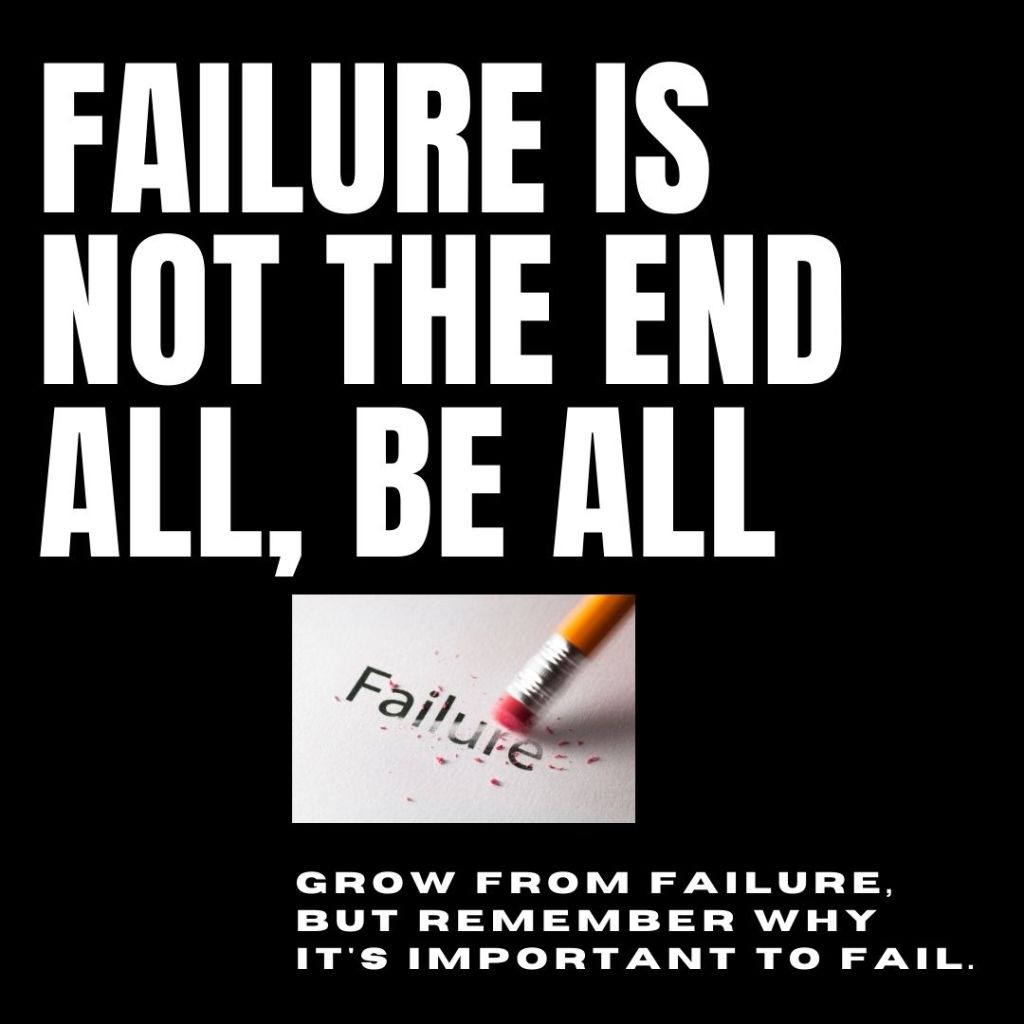
Most of us grow up not knowing what failure is. When we “fail,” we just keep going or keep trying. We don’t get berated for falling when we try to walk. We don’t get criticized when playing t-ball and miss the hit. Instead, we are taught to keep trying, keep working, and grow from our experience. At times, encouragement is also thrown our way to hope we do better.

Somehow, that changes though as we age. Somehow encouragement turns into negative, non-productive criticism. Keep trying turns into giving up. Self-esteem gets tarnished and hurt. Perfection is expected, even though perfection doesn’t truly exist. A minimum standard becomes a measurement – whether it be weight, grades, time management, etc.

Somewhere along the way, we lose the meaning of what it truly means to fail and the importance of failing.

Childhood Failures Encouraged

During childhood, it is considered a gift to fail. Even though it’s not necessarily called a gift, the idea of it being a gift is there. 

When babies first start speaking, they don’t say “mama” or “dada” on their first try. Instead, parents, friends, and other family members giggle, smile, and keep repeating the words in hope to help the baby say “mama” or “dada.” These same people don’t look at the baby with disgust and say, “You can do better. I’m disappointed in you.” 

Kids are notorious for lying – intentionally or not. Sometimes it’s a little white lie, while other times it’s quite large. As parents, a discussion is had with the child to encourage telling the truth and explaining the issue with lying. After the discussion, there is hope that there will be a change in behavior for the lying. 

As children, it is encouraged to play, make friends, learn new games, and socialize. The more these things occur, the more growth happens. When children don’t play, don’t make friends, and don’t socialize, adults encourage it and sometimes seek assistance to make those areas grow. A concern is given for those who do not play, make friends, learn new games, and socialize. 

So why do these expectations turn into negatives?

Adult Expectations

Somewhere around the end of elementary school and beginning of middle school/junior high, society starts to place higher expectations of children. They must make certain grades, they must respect others (especially adults), they must listen to rules, they must stay quiet when spoken to, they must work with others, etc. 

It changes from encouragement to expectation. If those expectations are not met, we start to have discussions with children and let them know it’s no longer encouraged, but expected. When these expectations aren’t met, then someone becomes disappointed in them. In turn, it hurts their self-esteem, causing more issues with the encouragement of what they struggled with in the first place. 

Continue that through high school where a required ACT/SAT score is needed to get into college and so many credits are required for graduation, placing pressure on an individual to make a specific score. The higher your score, the more likely you’ll get into a college of your choice – whether it be grades of ACT/SAT. Now, that encouragement becomes more pressure based than something out of genuine effort. College just intensifies this. 

Students begin to work jobs. There are expectations in jobs. In the beginning, new employees are often “guided” and given constructive criticism about their new job. However, that constructive criticism becomes toxic. It starts off slow with general criticism. Oftentimes, it turns into peers talking about one-another, which in turn breaks the spirit of the employee. Even if this doesn’t occur in front of the person, word eventually gets back around.

In all of these struggles, we forget the gift of failure.

Joys in Failure

What makes failure such a great concept? Why is failure so important? How do we encourage failure in a positive way?

Failure allows people to grow as individuals. It allows them to reflect on what happened, what went wrong, and how to prepare for the future again. Failure creates an atmosphere for continuous growth. Continuous growth is important as a person to ensure we become better. We can become better as a person, as an employee, as a friend, as a mother, as a father, as a sister, as a brother, etc. If we stay stagnant in who we are, we risk losing important people and things around us. 

Along with growth, failure allows us to handle criticism better – either from ourselves or others. Failure tells us that sometimes things happen, sometimes we mess up, and sometimes we need help, and that’s okay! Having that guidance allows us to not become broken in our self-esteem, but instead say, “I overcame this,” no matter how big or how small. It breeds self-acceptance in what we are able to handle and what we can learn. A person who thinks they are always right has no room for growth and will never see the value in failure. 

Failure also allows us to find ways to never give up. When we fail once, we tend to try again. Failing multiple times, especially in adulthood, we tend to get discouraged. However, if we look as failure as a lesson instead of an action, we can see where growth can occur.

Applying for a job, but not getting the job, because of a bad interview is a learning lesson. We can reflect on why it was bad. Was it the outfit? The noise? The choking during answers? We take time to reflect on the possibilities on the why to make changes for the future.

Not making the sports team can also reflect on a lesson. Did we not make the team due to skill? Teamwork mentality? Conflict in scheduling? Take those lessons and make the necessary changes.

We don’t give up. We learn. We grow.

Change the Mentality of Failure

Failure is so important to the growth of people and society. Without failure, we won’t change, which causes many problems within ourselves and in society. Failure allows us to see the possibilities in what can be. Failure is incredibly important. 

As a society, we need to remember what it was like growing up and how failure was encouraged. We should take those tools we experienced as children and promote them into adulthood. It is okay to fail, if we approach it in a way that encourages change. Instead of criticising someone in a negative way, we need to provide ways to encourage the growth that can be produced from failure. 

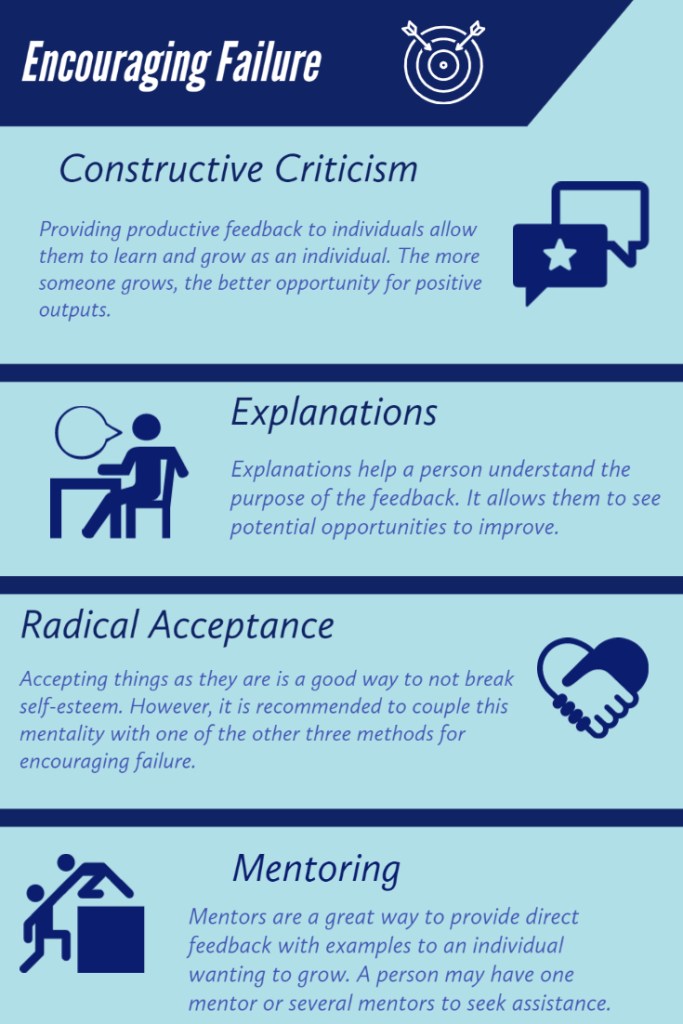
Ways to encourage failure: 

  1. Constructive Criticism: Constructive criticism allows someone to see where they went wrong and how to fix it without their self-esteem being shattered.
  2. Explanation: Explanations allow someone to understand the why, how, what, etc. This will give them clarity on why someone wasn’t happy about a specific issue.
  3. Radical Acceptance: Radical acceptance is just accepting something as it is. “It is what it is…” is the best way to describe radical acceptance. It cannot be changed. What is done is done, what is in the past is in the past. However, I would highly encourage pairing this with constructive criticism or explanation.
  4. Mentoring: Becoming a mentor is underrated, especially in the topic of failure. Mentoring should be something encouraged to allow others to learn from someone who does well in the area in which they are struggling. It could be one person assigned as a whole mentor or multiple people assigned for a variety of topics in need. Mentors are incredibly important to growth. 

Failure will always be a part of our life. No one is perfect. Even those that think they are have room to grow. Failure is a part of change and growth. Failure can be overeating, forgetting a blinker at a turn, or not making the score you expected. All of these examples have room for growth if approached the right way.

Going Back to Our Roots – Polar Vortex Edition

The United States was recently hit by an Arctic Polar Vortex. Although this isn’t uncommon for northern states, for southern states it came as a shock. Places like Texas hit temperatures, snowfall, and ice records that haven’t been seen in decades or even centuries.

During this historic event, Texas had to conduct rolling blackouts in order to preserve electricity. Some homes went over 12 hours without power. Others lost power for 40 minutes, but then it would turn back on for 15-20 minutes. This left many people with no warmth or ability to cook.

The temperatures were steady between 6° and 20°. Wind chills fell between -17° and 0°. This was the second time in less than a month that Texas received record breaking temperatures and snow. Going outside to build a snowman is fun, but maybe only for a few minutes before hypothermia becomes a concern.

Internet service providers were offline. Cell phone towers were overloaded, so data slowed down (or cut in-and-out). The roads had anywhere between 3 inches and over a foot of snow on the ground, with ice underneath.  Stores closed down or closed early. Food chains shut down for the safety of its employees. County offices shut down for the week. Schools delayed learning face-to-face and virtual (due to power outages). All of this led to families or individuals being stuck inside with nothing to do.

Unable to go outside for long periods of time, unable to drive anywhere due to road conditions, unable to use power, unable to use the Internet, and having barely any data, when we live in such a technology drive world, what can be done to prevent yourself from going stir crazy?

Emergency Kits

Hopefully, living in a place like Texas, notorious for severe weather, you’ve stocked up on a variety of candles or emergency lights. Texans are known to prepare for weather events from hurricanes to tornadoes. Using these emergency kits are beneficial in times when there is no power. But how can they be used?

Reading

By setting up a candle, or emergency light, you can read either a new book or a favorite book. Even as a family, you could return to elementary and secondary school and take turns reading. This can create a bonding moment between members, increase comprehension, and can be fun for an individual or a family.

There are so many genres to read from. We all have our favorites, but maybe this outage provides an opportunity for you to explore new genres. As someone who didn’t enjoy any science fiction related books, including dystopian, I always looked the other way when I was suggested any science fiction or dystopian books. Harry Potter and Hunger Games never interested me (I know, I know…I’m sorry). It wasn’t until a co-worker introduced me to a dystopian science fiction book, Red Queen, that I was able to truly explore the genre. I enjoyed the book so much that I continued the series. It was a rare moment that I truly enjoyed a genre that I always found unappealing.

I suggest the Genre 10 challenge. In Genre 10, you choose 10 genres of reading that you normally wouldn’t read and give them a shot. Some households already have all the genres in their house, but usually dedicated to specific people. What genres can be suggested?

  • Young Adult
  • General Fiction
  • Realistic Fiction
  • Historical Fiction
  • Poetry
  • Romance
  • Dystopian
  • Science Fiction
  • Biography
  • Autobiography
  • Memoir
  • Self-Help
  • Business
  • Finances
  • Psychology

With so many options, even reading one new genre would be worth a try during a national Arctic Polar Vortex.

New Hobbies/Interests

Learning new hobbies or interests is something we don’t often think about, because we live in a country of go, go, go! We don’t give ourselves enough time to explore new tasks anymore. Using your emergency kit, you are able to spend some time learning something new.

Hair, Beauty, and Fashion

You can use this time and resources (candles) to explore new styles. Using candlelight, explore options in makeup, hair, or even fashion.

With a candle lit in the bathroom, you can sit in front of the mirror and begin creating new looks for yourself. By using simple techniques and products (gel, hairspray, mouse, etc.), you can explore new hairstyles. We get so used to seeing ourselves look one way, and we become comfortable with not changing. Why not use the day(s) to explore a new look that has been considered for some time? Maybe instead of slicking the hair back, explore slicking it forward, to the left, to the right, parted down the middle, etc. Work with updos (man bun exploration). Try a half up-half down look. It may be worth a shot to even bring the mullet back (Miley Cyrus is trying to bring her dad’s signature look back in style).

Makeup is another area to be explored. I’m a pretty simple person when it comes to makeup: mascara and occasionally eye liner. If you’re like me, or even do slightly more, maybe this is the time to explore full on facial looks like that of famous makeup artists or influencers (James Charles, Jeffree Star, Jaclyn Hill, Anastasia, Bobbi Brown, Pat McGrath, etc.). Have you always wanted to learn a cut crease or contouring? Try it now! What do you have to lose? You’re in your house with nothing better to do than explore! Want to practice gradient eyeshadows or a smokey eye? Go for it! There could be no better moment than now to explore such interests. Proud of your look? Take some headshots of the new look using your phone or a battery camera (yes, they still exist).

We all have closets with at least one piece of clothing we’ve hung on to, but never worn. Whether the clothing be too big, too small, not in season, or we just haven’t gotten around to it, it’s time to put it to use.

We become comfortable wearing the same outfits and rotating them and the color schemes (nothing like maroon and mustard yellow, purple and yellow, pink and green). Why not branch out on a day when everything seems helpless and create some new looks? Take the time to play with color schemes you normally wouldn’t consider. Mix and match outfits that have different looks to them (grungy with preppy, business with casual, modern with vintage). Not an accessories person? Or have so many shoes you’re not sure how to incorporate into your fashion? Try them all! There is no better than to experiment. You’re sure to find something that stands out and makes you excited about wearing it when the weather gets better! As a bonus, you could provide a fashion show for neighbors, friends, or family!

Workout

Bodyweight exercises can be done anywhere! Every year, as a new year’s resolution, so many Americans state they will “eat better and lose weight.” While experiencing no power, why not challenge yourself to starting this new habit. It doesn’t hurt that it keeps you warm in the process. Not sure where to start? We all need a starting point.

Burpees are great for a full body workout. It can be modified for the advanced or beginner workout. In a beginner range, you may just reach up, bend down to touch the ground, put one foot back at a time, and reverse to come up. As an advanced workout guru, you could squat down, jump up to reach the sky with those buff arms, jump down and kick out at the same time, do a pushup, jump back, and repeat. Any modification in between those two is also great.

Walking, running, side steps, or jumping jacks in place is always a simple option. This will let your heart start pumping and burning calories while there is nothing else to do. You could do it for hours or in intervals. Maybe walking for 20 minutes, rest for 10, and walk another 20 minutes. Again, this can be modified in any way, but it’s a way to stay busy.

Don’t have weights? Use items around the house. Milk or water jugs are great replacements for dumbbells. Laundry detergents, bleach bottles, and fabric softener bottles also work great. Need something small and light? Use water or soda bottles to lift repeatedly. Do you have a case of water or drinks you can use to lift? Do you have cat litter you can carry? What about a toddler to carry around the house? It’s not so much about the weight as it is about working the muscle. Use a wall for wall pushups or wall sits. Use a chair for dips or stability for leg workouts. Use the resources within the house to build those muscles and get the blood flowing.

Other General Hobbies

Do you love to write? Draw? Sing? Paint? Dance? Use this time to create beautiful masterpieces. You can keep them private, show them off, or send them out when the weather clears and/or internet is back on. Make a song, even if it’s just the lyrics. Create a musical chord on your guitar or piano. Create a routine to a song you love. Doodle away or draw a 3D piece. Even without a canvas or paint, we can take makeup, food color, food, or drinks to paint on paper, cardboard, etc. Learn how to hand sew items or crochet in the dark. I have yarn and a crochet needle that have been sitting in my spare room that I’ve neglected. Now is the time to dig it out and try it! Start a book (non-fiction or fiction). Do you have stage fright and need the opportunity to practice? Go to a neighbor, sing in front of family, record yourself to post later. Are you a builder? Do you want to practice building with a variety of media (cardboard, paper, bottles, cards, etc.)? Try it! Practice your poker technique or chess technique for your next big match. Practice gravitational pulls of spinning a basketball on your finger or balancing something on your head while walking. Sports coach for a local community or want to start getting involved in the community? Use this time to jot down plays, come up with government bill ideas, municipal involvement/changes, volunteer opportunities, financial investments, etc.

Redecorate, Organize, or Clean

Even by candlelight, we can use this time to redecorate. Want to try a new look for your living room? Do it now while you have the time to do it. You don’t like how the bathroom counter looks? Move stuff around, organize into boxes below the sink, or find new ways to not overcrowd the vanity. Want to rearrange the bedroom to be more effective in movement? Try it now, even by candlelight. If you don’t like it, you can always move it back. Do you not like the dining table near the wall? Try to move it to the center of the kitchen and see if it flows better. If it doesn’t, move it back. Wipe the counters down, dust what you can see, wipe the doors down. You may not be able to vacuum or mop, but this is an opportunity to do what you can. Now is the perfect time to try these new ideas. Pinterest is overloaded with ideas for people to try!

Try It Now

Being creative seems to be a lost art, especially as we get older. We spend so much time focused on our work and surviving that we lose site of our passions and creativity. There has never been a better time than sitting in idleness that we can spark our creativity again and learn something amazing about ourselves. Prevent yourself from getting stir crazy and try something new while you can. There are so many options available to us that we often forget about because the world we live in is now at our fingertips. Maybe going back to our roots isn’t such a bad idea. Don’t miss the opportunity to try these and look back years down the road and say, “I wish I would have…”

Tap Tap Art Studio versus Painting with a Twist

Guided painting classes have become popular in recent times, thanks to companies who are developing art classes locally and nationally. Within the Killeen and Harker Heights area, there are two popular companies that offer such classes. How are they alike and different? Which one is the better choice? Let’s take a look at what each location has to offer.

Tap Tap Art Studio History

Tap Tap Art Studio is a local small business. It was developed to help promote the arts locally, outside of regular primary and secondary classes. The company initially started its location in a bus. Eventually, its popularity grew, and they now have a physical location. Tap Tap Art Studio focuses on all aspects of art: from music, painting, pottery, and more.

Painting with a Twist History

Painting with a Twist is a national brand. The first location was opened in Louisiana after the devastating Hurricane Katrina ruined area. It grew over time and became one of the most recognized names in its category. The idea behind Painting with a Twist is to have fun and learn something amazing at the same time. Painting with a Twist focuses only on the painting aspect of the art.

Activities for Children

Both locations offer activities for children; however, Tap Tap Art Studio offers several different types of activities. Tap Tap Art Studio offers camp and after-school activities; whereas Painting with a Twist only offers children painting classes. These children friendly events are limited on days and times, but the paintings are appropriate for the ages advertised.

Parties are available at both locations.

Adult Activities

Both locations offer adult painting services with the option to BYOB (Bring Your Own Beverage) and snacks. The benefit of Painting with a Twist over Tap Tap Art Studio is the variety and classes offered to adults. Painting with a Twist has more available classes to adults with a wider option of paintings. Tap Tap Art Studio’s paintings for adults are often rare, limited, and few choices of designs.

Painting with a Twist offers a specialized Paint Your Pet session. In this session, you send in a photo of your animal. They draw out the outline of the painting. Each guest has a different picture. From there, they guide them on how to mix colors and such to make the animal appear realistic. This customizable painting can be especially important to those who may have recently lost an animal and want to cherish the memory of their fur babies. In this session, they provide more one-on-one guidance to ensure the painting is as realistic as possible. These sessions cost more due to the amount of assistance they provide and customization that is provided. It’s well worth it for the animal lover!

Parties are available at both locations. However, Painting with a Twist allows fundraising activities for groups of any kind. A percentage of the cost goes back to the group. Usually the paintings are related to the topic/group at hand.

Available Paintings

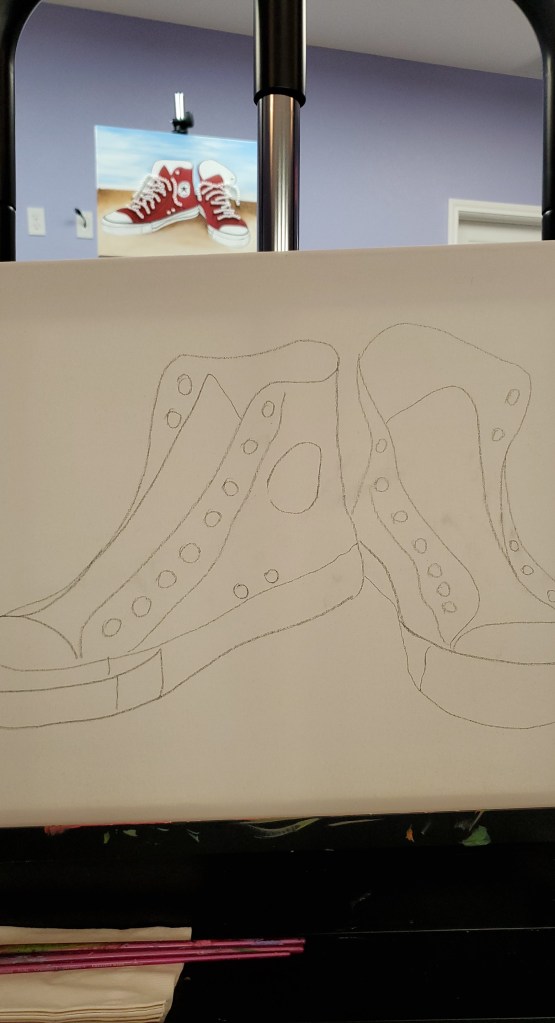
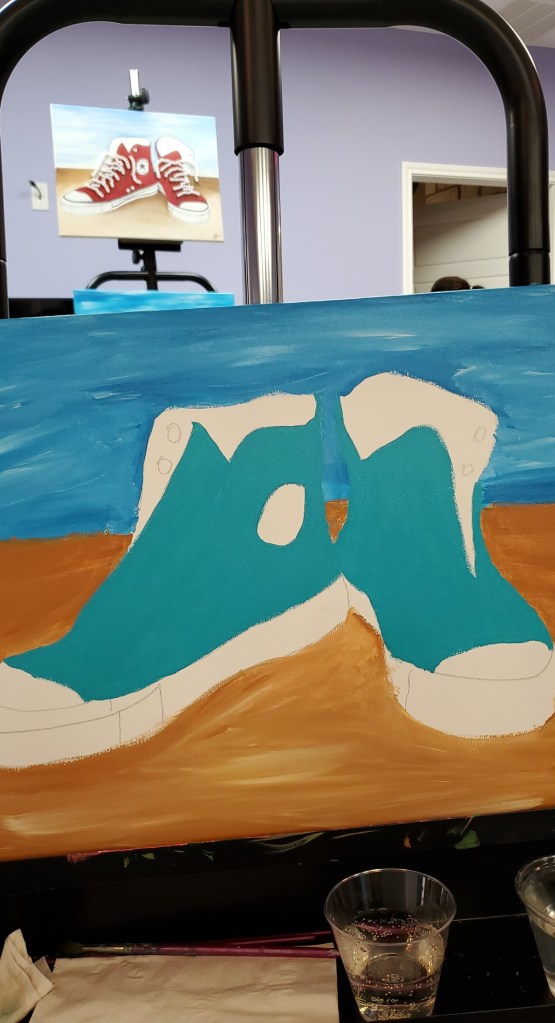
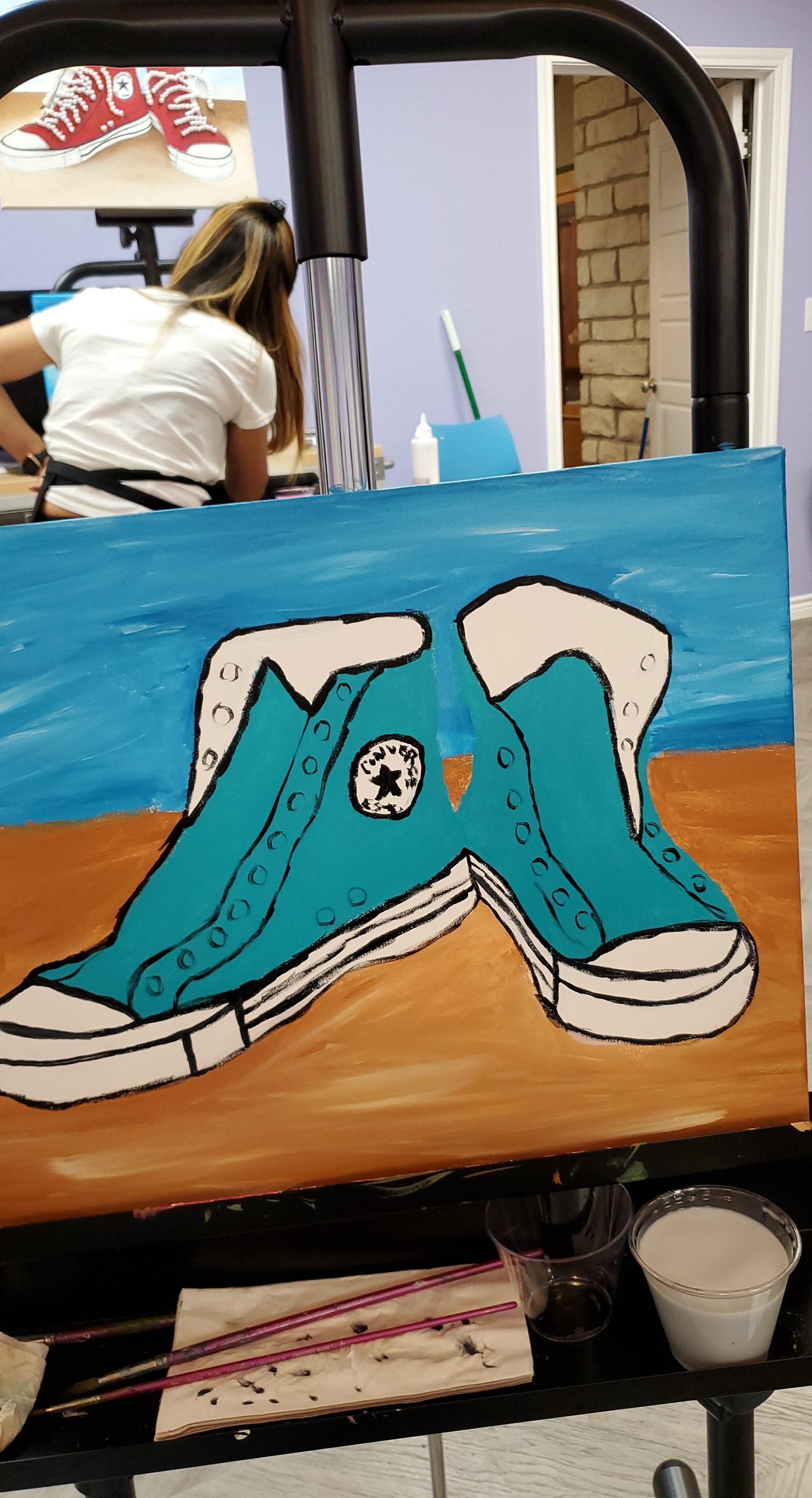
The paintings at both locations are easy, but challenging for a non-artist of any age. Both locations offer a 16″ x 20″ canvas (sometimes it varies on the painting) with a pre-drawn piece of art. Both locations guide the user through the process of painting (completing the background first, allowing it to dry, continuing to the next layer, allowing that to dry, etc.). Both locations have a color palette for each painting, but they also allow customization.

Both locations offer assistance with paintings. If you are a struggling artist, such as myself, they come by often and guide you. Rarely do they step in and “fix” the painting, but it is possible. As someone with a heavy hand, sometimes I can overdue the amount of paint on a project. However, they will come by and show how to spread it out without messing up the look or concept of the painting.

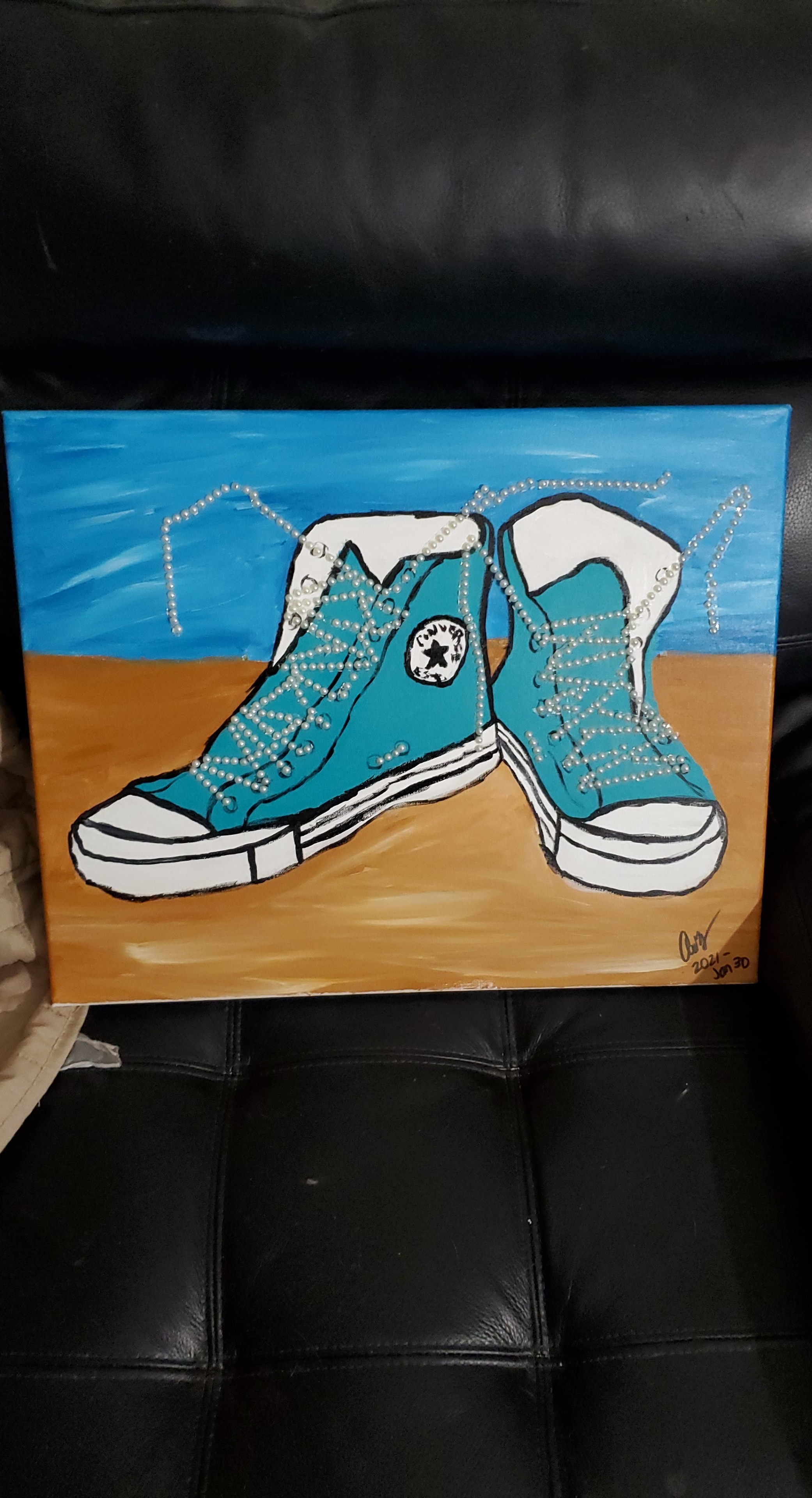
One difference in companies regarding painting is Tap Tap Art Studio allows mixed media paintings. A recent painting with Tap Tap Art Studio included acrylic painting with pearls for their “Chucks and Pearls” painting. Painting with a Twist only completes acrylic paintings with no other forms of media. If they conducted the same session, no pearls would be added. Instead, it would have been just paint depicting the pearls on the shoes.

COVID Adjustments

Painting with a Twist has made the effort to adapt to the times with COVID. Painting with a Twist offers take home paintings. Included in this are instructions on how to complete the piece. They have also supplied online videos on how to complete these projects for the visual learner. They have constant access to customer service for questions. Tap Tap Art Studio had some take home projects when COVID initially hit in the United States, but has since discontinued such activities.

Classes have been reasonable in terms of a cap limit of people. Both locations have large rooms to space people out. Both locations have a maximum amount of participants to reduce the possible exposure of COVID to guests. Both locations are adamant about cleaning their supplies, rooms, door handles, etc. Both locations offer sanitizer, masks, and other COVID needs when entering the building.

Overall Feedback

Both locations offer amazing activities for children and adults. The biggest takeaway from this is a matter of preference.

If you’re someone who enjoys learning and completing several art pieces, then Painting with a Twist may be more up your alley with the options and times available. If you’re the person who is more focused on activities outside of painting, then Tap Tap Art Studio would be a better choice for your interests.

Give both places a try and see which one fits your needs and wants. Support a small local business or support a small local franchise. Either way, support the local arts and economy while learning something new and having some fun!

Personal Paintings from Each

Tap Tap Art Studio

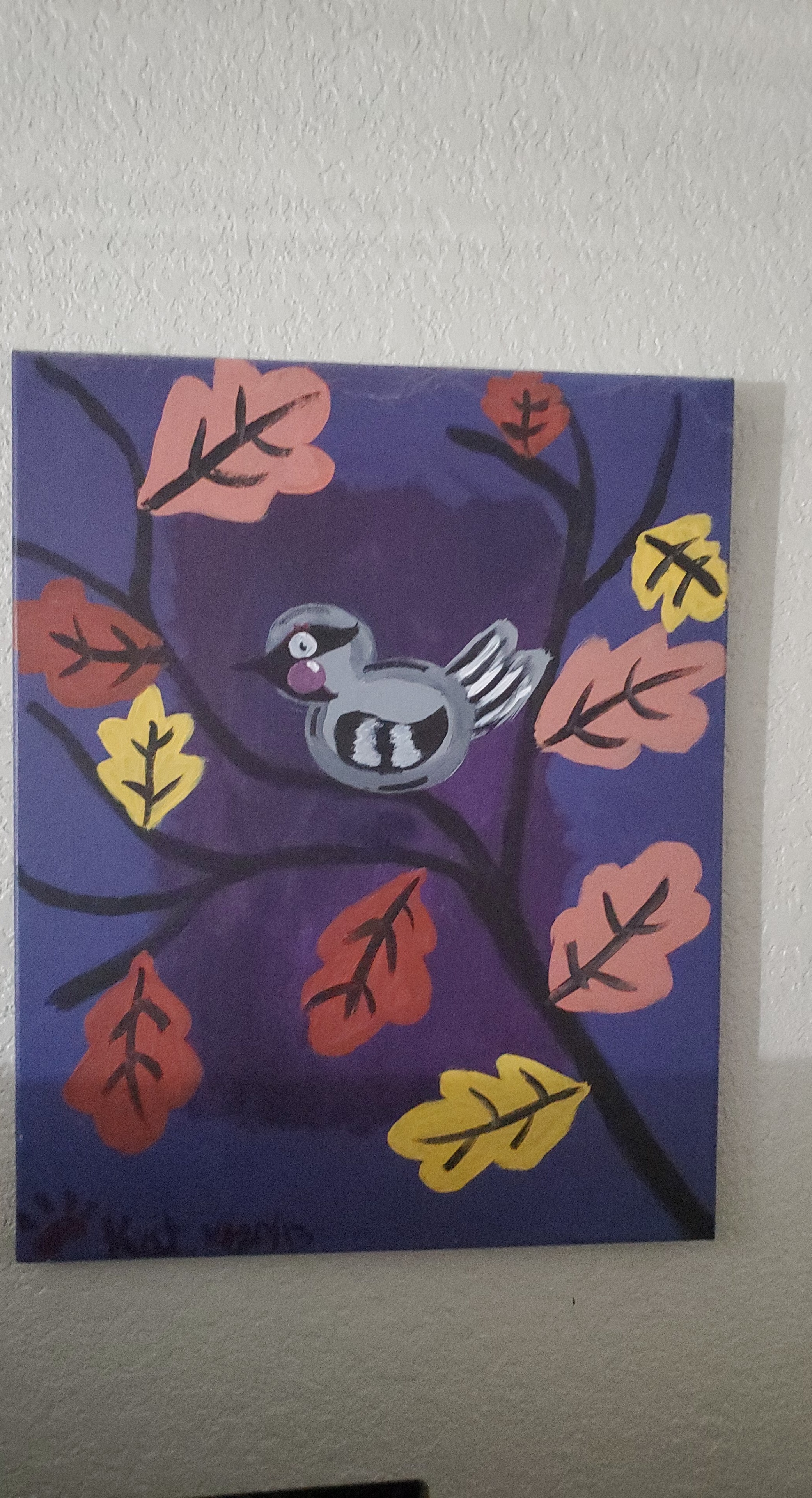
Below is my mixed media “Chucks and Pearls” from Tap Tap Art Studio.

Painting with a Twist

Below are completed paintings from Painting with a Twist

Educational Technology

With COVID-19, virtual/remote learning has become a standard within education. Whether the student is 100% virtual, or if the student is face-to-face with virtual elements, it is important to find new, engaging ways to grab students’ attention. There are several technology apps within education that are beneficial to the teacher and student. The students’ engagement levels will quickly rise with these sites or apps: 

  1. GimKitGimKit is a newer site in which students are highly involved in a competition of wits. GimKit allows educators to ask students questions, in which the students earn “money” to use for special upgrades or powerups to use against other students. However, wrong answers take away their money! GimKit was created by a student for students, which is what makes this site so successful. Students know what students want and how they are engaged best. Although this team and site is continuously growing, no one can deny this site has an amazing start!
  1. KahootKahoot is another competitive site and app in which students compete for a place on the podium. The faster your answer is correct, the more points you receive. If you have an answer streak, you also gain additional points. If the student chooses the wrong answer, they do not gain points or lose them. This site and app allows students to answer questions based on shape or color. One positive aspect of this site is the pre-made quizzes that educators may choose from, or the educator may create their own quiz. Kahoot has made many developments over the years to focus on other areas outside of education as well. 
  1. NearpodNearpod is a newly popular site and app that educators enjoy. Nearpod features different activities for the educator to use: matching cards, virtual field trips, race games, interactive drawing, interactive response boards, interactive polls, and more. Over the years, Nearpod has developed their system to include additional features and engaging activities for educators to use in their classroom. The great benefit of Nearpod is the site or app can be teacher-led and controlled or student-led and controlled. Teacher-led presentations allow results in real time, whereas student-led presentations can be set for students to complete on their own time. 
  1. FlipgridFlipgrid is a great tool for virtual and remote learning, especially when connecting a classroom locally or from a distance. Teachers present a prompt for students to answer in which they can record their responses. This is great for students who may be shy, used for practicing speeches, or presenting information in general. Another benefit to Flipgrid is that students get to connect with people around the world, which is great for learning about cultures, education in other countries, and more. 
  1. SocrativeSocrative is a great resource for quick quizzes and tests, exit tickets, or reflections. Educators can keep students engaged while limiting use of paper. With options like multiple choice, short answer, or true/false, students can race each other in a competition of wits. 
  1. QuizletQuizlet is a tool in which flashcards can be made for or by students. This is great for implementing new vocabulary within the classroom. Educators may search for already created sets of vocabulary. Educators can have students compete in groups using the Quizlet Live feature. In this feature, students compete to receive the correct answers in a race for first place. Other options include a game and a matching set for vocabulary terms. 

With so many tools available to educators, it can be overwhelming on where to start or what to use. The best way to determine what works within the classroom is to practice and try some of the sites and apps. Many of these sites and apps you can share with coworkers and collaborate together on the project.

How COVID Changed Education

COVID has completely changed the way the world operates. It has affected how to interact as people, how to learn, how to do jobs, how to celebrate big events (baby showers, birthdays, weddings), and more. The area most impacted by COVID has been education.

Setting

With the COVID shut down in March, the physical setting of school has changed in several ways.

Virtual or Building

Over the summer, teachers and administrators received detailed, intense training on how to cater to the needs of students during a global pandemic – both virtually and physically. This training was needed, regardless of a global pandemic. With the uptick in technological needs, the training teachers and administrators received was a lifelong necessity.

Since March 2020, students have been learning virtually. Initially, schools were thrown into the new process and lessons weren’t well-developed. Teachers and students struggled with the way lessons were presented back in late Spring of 2020. Students who were already behind in grade level fell even more behind in their grade level, due to the lack of time teachers had to prepare for the national shutdown.

504 and Special Education

It appeared that students with 504 and SpEd needs were indirectly left behind. Although teachers tried to adjust to fit the needs of those with special circumstances, it was impossible to provide all the tools necessary with minimal training and preparation. Case managers of 504 and SpEd students did not know how to provide many accommodations. Some accommodations came naturally, such as: extra time, eliminating answer choices/shortened answer choices, oral testing.

Parental Support

Parents and/or guardians weren’t sure on how to provide for their students’ educational needs. It may seem easy to hover over a student to ensure they complete work, but completing work and learning are two different concepts. USA Today provided a great insight to how students and parents/guardians are struggling in meeting their student’s special education needs.

Choices and Growth

This year campuses received an option to start virtually or in-person. Daily Voice talks about how this could be the new normal, which I agree with. Some states allowed their districts to delay their start, while other districts chose to go against their states’ wishes and lose funding. Many campuses chose to do a combination of in-person and virtual. This presented new challenges (how to account for true attendance, when is work due, lessons virtually and in-person, what to do with students not completing work, how to handle special circumstances, password lockouts, eLearning platforms crashing, etc.).

Even though this was a more successful start than back in March 2020, and most teachers were more prepared for how to handle the curriculum, some teachers still struggle with the new methods that are expected from them. Older generations of teachers struggled with how to upload materials, make videos, use eLearning platforms, and the like. Districts tried to hire a fresh round of employees (teachers, technologists, coaches, etc.) to help with these struggling learners as teachers and replace teachers who left due to COVID.

Workload

One of the challenges faced because of the global pandemic known as COVID is the increased workload of teachers, administrators, coaches, technologists, and case managers.

Before and Now

Teachers were already battling an uphill battle of documentation for state and federal guidelines, but now they are facing additional documentation due to the choice of being virtual or in-person. Refinery 29 gives great insight to what teachers were facing at the beginning and middle of this pandemic, coming straight from the mouth of a teacher. Teachers were already required to provide lesson plans, sub plans, emergency sub plans, teacher input for 504 and SpEd students, tracking of accommodations, parent or guardian contact, tracking of submission of work and/or failures, and attendance.

In addition to doing all of this, teachers around the world are now required to face additional requirements for documentation for the campus and/or district to receive funding. A student going to the nurse now requires documentation that had never been an issue before due to COVID. A student not submitting work online requires more documentation than an email or phone call home. Teachers are now tracking how much a student has completed virtually, providing in-person and virtual tutoring, logging Zoom or Google Meets meetings for in-person classes and virtual classes, teaching simultaneously in-person and on Zoom classes, and maintaining discipline in-person and on virtual classes.

Technology Experts

Teachers have also become the first point of contact for technology issues with the expectation of knowing how to correct the issue. Teachers have faced password lockouts, resetting passwords, Microsoft 365 or G Suite not loading into eLearning platforms, Zoom or Google Meets not connecting, work not submitting on eLearning platforms, work not opening on these same platforms, the crashing of these platforms, and much more.

Physical Layout of Building

Although the structural building of campuses did not change, the way they handle the physical makeup of classrooms, lunchrooms, hallways, bathrooms and more have changed. The CDC provided new guidelines for campuses to follow, which limit the decision making for teachers and administrators.

Distancing

Classrooms around the United States went from an average of 25-30 students in a core classroom (math, science, history, and English language arts) to about 10-20 students per classroom. In order to maintain global pandemic needs, desks were changed and spread out throughout the classroom. Although teachers and students may not be able to obtain a six foot distance, teachers tried to shoot for a minimum of a three to five foot distance by placing desks with distance. However, classrooms just aren’t large enough to obtain social distance requirements. Mashable shows some pictures of what teachers are facing currently.

An example of an attempt to social distance is from a local campus:

Masks

So how do teachers get around this? Districts made it mandatory that students and teachers wear some sort of face covering (shield, mask, or a combination of both – anything except bandanas). In doing so, teachers are trying to space out desks about 3-4 feet apart still. This isn’t ideal for a classroom for a variety of reasons, but mainly because it changes the way teachers plan their lessons. However, safety of everyone is the number one priority. If that means we have less collaboration and engagement for face-to-face learning in order to be safe, then that is what the campus must do.

Fountains

Water fountains were covered and/or disconnected in preparation to prevent the spread of COVID at some campuses. Some water fountains were replaced with water bottle refill stations. Another option campuses have offered is leaving the water fountains uncovered, but only used to refill water bottles. That puts a lot of trust in students, and it requires much supervision from adults to ensure these are being used properly.

Procedures

As mentioned previously, facial coverings have become a requirement for adults and students in the building. Although they have options as to their facial covering, this still presents many issues.

What happens if a student comes unprepared with a mask? How many chances do they get in order to self-correct? How many free masks will students receive before disciplinary actions occur? Will disciplinary actions occur? What is considered a truly appropriate mask in terms of coverage and design? Too many questions and not enough answers!

Cleaning Routines

Teachers, bus drivers, and custodians are all working overtime to ensure their environments are sterilized. Bus drivers are required to sanitize the bus after every drop off. This includes seating, railings, or any other area a student may touch. Custodians are wiping stair railings, door handles, benches (even though students are not supposed to sit on these, they are cleaning to ensure they are safe), fogging rooms in the building, bathroom stalls, and more.

Although several of these cleanings have always been done (such as bathroom stalls), the wait time of sanitizing takes much longer, which sometimes requires bathrooms to be shut down temporarily. Teachers are using medical grade disinfectant to wipe desks, chairs, keyboards, books, dictionaries, and much more in between classes. Mind you, teachers are supposed to be in the hallway between passing periods. Teachers also have to worry about students with allergies to any cleaner. The disinfectant needs to sit for a minimum of three minutes. Passing periods for most middle school campuses range from three to five minutes. It makes it difficult for a teacher to be at two places at once, while ensuring safety both with COVID and allergies.

Supplies

Teachers are not allowed to “borrow out” supplies anymore. Students cannot lend supplies to other students. If a student comes unprepared, teachers are constantly giving students supplies to keep. This doesn’t seem like a big deal. However, if a student needs a pen/pencil every 180 days, that will add up with an average of 150 students per middle school teacher and 200 per high school teacher. These are endless battles faced in a normal school year, but teachers normally have procedures in place to receive their items back. Given that most supplies come out of the pocket of the teachers’ income, it can be frustrating with these new procedures but necessary to keep everyone safe.

Nurses/Clinic Assistance

Nurse routines have also been impacted due to COVID. In the past, the nurse would welcome any student into their office with minor issues (headache, band aid, feminie products, etc.). However, with COVID, the procedure in sending a student to the nurse’s office has changed drastically.

Unless a student has a medical condition (diabetes, allergies requiring EPI pens, seizures, g-tube, etc.) or has COVID symptoms, students’ medical needs should be assessed within the classroom. Teachers were equipped with necessary tools to handle many medical issues within the classroom.

Nurses used to be able to check vitals for teachers and administrators in the past. Yet again, COVID has changed this. Teachers and administrators are no longer allowed into nurses’ offices. If it is concerning to have vitals taken, nurses have offered to come to the teachers’ classrooms. This shouldn’t be because of a curious moment though, but instead should be because they feel as if something is bothering them (heart racing, dizziness, etc.).

Breakfast & Lunch

Breakfast and lunch used to be a time when students could socialize and release all their energy for the day. Now, students are expected to skip seats and minimize their movement and socialization. Imagine seeing your best friend daily, but not allowed to sit by them or talk to them because a pandemic is limiting you.

Impact on Educational Setting

Although some may see the benefit of the pandemic is a smaller face-to-face classroom, there are several downfalls. Because of the pandemic, students are no longer allowed into small groups, collaboration groups, or the like. This is hurting the education of students. Collaboration is the essence of all jobs in the future for students. More importantly though, collaboration helps students understand material by discussing it with each other on a peer level.

There are millions of people impacted by COVID-19, but the biggest group facing change right now are those in education: teachers, students, paraprofessionals, and administrators. School districts have lost teachers at alarming rates, and it won’t be slowing down as long as the coronavirus is around.

Virtual Learning – A Gift or a Curse?

With the lovey visitation of COVID-19 (coronavirus), our world has been turned upside down. Some of the United States have been affected by this since late-January. Other parts of the United States didn’t feel the repercussions until around March. Although many states have shut down, most states reopened around late May/early June.

Impact on the Educational Industry

One of the biggest impacted areas has been education. Around March, nationwide schools had shut down to prevent the spread of COVID. With so many unknowns, even to this day, it was the safest thing to do at the time. Districts nationwide readjusted, or extended, their Spring Break in order to figure out the logistics of how the rest of the year was going to be handled. Many districts took the situation week-by-week.

The Start to Virtual Learning Outside of College

One of the go-to options was digital/virtual learning. Even with that, many districts were ill prepared for the last minute changes that had taken place. Many families didn’t have Internet, technology, time, the ability, or much more to handle the virtual learning. Internet providers stepped up and provided discounted, or free, service for a short time to help students learn. Some districts provided technology to students, but quickly ran out. Parents/guardians were temporarily on hold with their life, but lacked the teaching credentials to properly help their child. When they returned to work, they weren’t around to ensure students completed their work.

When summer hit, many schools canceled summer school. However, with school starting again – now what!?

The Return to School 2020-2021

Summer Training

Teachers around the world, especially the United States, have spent their summer preparing for the return of school in a variety of ways. Much of their professional development was focused around virtual incorporation and/or whole-hearted online learning. Teachers discovered tools like Flipgrid to connect students from around the world, Nearpod for students to complete teacher led or student led lessons, Playposit to help students stay engaged in videos from YouTube, and many more online learning tools.

In addition to virtual teaching strategies, tools, and techniques, teachers also had professional development on their normal blood-borne pathogens, suicide awareness, mental health, FERPA, and more. This year was impacted even more so with the extra COVID-19 training campuses had to face (signs, symptoms, cleaning procedures, how to handle, how to social distance in a classroom, etc.).

Questions

In addition to all their normal trainings and virtual trainings, teachers also had to figure out a lot of their future for themselves. What masks work? Would they wear a mask all day (yes, we found out)? How do you social distance 25-35 kids in a classroom the size of a standard American kitchen? What happens if someone gets COVID-19 in the building? Where do they find sanitizer that doesn’t smell like tequila? Where do they find wipes for their desks, handles, etc.? How do they handle small group instruction? How do they lend out books for student reading? How do they lend out supplies for those who can’t afford it (CDC states no communal supplies, so that solved that concern)?

Teachers were left with a million questions and received a lot of: we’re not sure. With so much uncertainty, many teachers opted to leave the profession or retire, causing an already short-staffed profession in a much less staffed.

What’s the News?

School districts all over the world today are still unsure about the status of COVID-19. There is a lot of debate on whether students can or can’t transfer it to adults, each other, etc. With this, many school districts gave parents/guardians the option of online or virtual learning. Some districts delayed school, some districts still have their plans in the air, some districts are deciding to open. The one trend I keep seeing though is: virtual learning is here to stay regardless of COVID-19.

Many people are not happy about this trend. They have many of the same concerns from March-June (lack of technology, no or slow Internet, no time at home, and much more). However, I think a lot of society is missing the good in the situation.

The Good in Virtual Learning

With living in a digital world, there is no doubt that the upcoming generation needs to be more prepared technologically than every before. We aren’t talking about Facebook, TikTok, Twitter, Instagram, Snapchat integration, but true digital needs like Microsoft Office, G Suite, digital design, writing, and much more.

Many students in a classroom through high school have no idea how to format a paper properly, on their own, to write a college level entrance essay. That’s a problem! Students can take this opportunity for so many beneficial aspects of virtual learning.

Repetition

When teachers record lessons, either from their classroom or home, students will have the ability to rewatch the lesson several times, if needed. A student who may be 504, Dyslexic, Special Education, Emotionally Disturbed, or may have other (dis)abilities, they are able to rewatch it several times for clarification. Students may be able to pause and take notes instead of trying to focus in class and write at the same time. Even if the teacher provided notes online, they would be able to underline, highlight, or make additional notes during the virtual lesson.

Scheduling

If they’re unable to watch the lesson from 10:00 am – 11:00 am, when class is, they can find the recording later in the day and still be held responsible for content presented during the lesson. This is a great planning tool for entrepreneurs, college preparation, job scheduling, and more. Maybe the student is a night owl and tends to work better in the afternoon than morning. This will give those students an opportunity to focus better. This is also great if they have a parent whom works from home and needs to use the computer/Internet during the day for business. The student can spend the afternoon completing their work.

Responsibility, Team Work & Work Ethic

One of the biggest benefits is teaching students responsibility, team work, and work ethic. With online learning, even as early as elementary school, students develop a sense of responsibility. They are responsible for completing their work and turning it in. Just like an in-person classroom, they are responsible for completing and turning in their work. However, this puts more pressure on a student because they don’t have someone reminding them constantly throughout the day to complete and turn-in their work.

This is a great way for students to learn true team work as well. With programs like Microsoft Office and G Suite, students are able to collaborate with each other from a distance. Depending on how the teachers set up the assignment, students will be able to work virtually with one-another. With many careers requiring collaboration within their network, it is important to instill this whether it be in-person or virtually. So many tools are available for students to collaborate on documents or video!

It is so incredibly easy to cheat with virtual learning. However, there is a lot of risk as well because it becomes easier to copy and paste over a hand-written response. The virtual learning puts a bit of pressure on students to not only ensure they’re not plagiarizing, but also not sharing answers or Googling answers. It’s acceptable to use Google as a research tool, or in our case a way to look information up we may not know, but it’s not okay to use it as a copy and paste skill.

College Prep

America is one of the countries that may have all the greatness, but we severely lack in college preparation – whether it be academics, life skills, social interactions, or financial responsibility. We need to do better at preparing these students for college, and virtual learning is no exception.

Many colleges use virtual learning in some aspect of their students’ education. Even in-person lessons have a virtual component to them in order for students to submit work (papers, presentations, designs, analysis, financial literacy breakdowns, etc.). By introducing some of this minimal modalities (such as papers and presentations), students will be prepared not only on how to format them, but also write and submit them. Although the college may use a different eLearning platform, they will still be able to have an idea on where to look for submission and/or learn faster on the new platform.

Although that may seem minor in terms of a benefit for virtual learning, it is extremely impactful when discussing the preparation of student post-secondary learning. Our nation has become one in which having a Bachelors degree is no longer sufficient in terms of education. The competition for employment is astronomical! When given the tools ahead of time, students can better focus on classes more relevant to real-life experience and internships.